Tampilkan postingan dengan label term. Tampilkan semua postingan

Minggu, 20 Maret 2016

Small Boat Plans And Kits


With only nine months to go to next year’s General Election, the government’s appetite for messing about with the planning system seems to be unabated. De-CLoG has recently published a miscellaneous rag-bag of quite far-reaching proposals for further changes to the planning system aimed (they say) at furthering their objective of streamlining planning.

The government is proposing to tinker with the procedures for neighbourhood plans. They propose to introduce a 10-week time limit for LPAs to respond to applications for a neighbourhood area to be designated (or for a community right-to-build proposal), as well as modifying pre-submission, consultation and publicity requirements for neighbourhood plans. The requirement for a six-week consultation period on a proposal for a neighbourhood plan would be removed, but affected landowners would have to be consulted. The changes will also address the need to comply with the Strategic Environmental Assessment Directive. The general aim is to speed up the Neighbourhood Plan-making process, and to reduce the ability of reluctant LPAs and opposing developers to disrupt or delay Neighbourhood Plans.

These proposals are most probably prompted by the limited take-up of neighbourhood plans so far, and the difficulties and delays that have been encountered by those who have embarked on the neighbourhood planning process. The government’s aim seems to be to beef up Neighbourhood Plans in an effort to demonstrate in their next election manifesto that they have put ‘localism’ into action, whereas these much-vaunted initiatives have proved up to now to be a rather damp squib, and are unlikely to counter the impression that the government effectively strangled localism at birth by imposing a requirement on LPAs to approve significantly more development in their areas, whether their councillors or voters like it or not.

This is the one area of change among those proposed in this consultation paper that would appear to require primary legislation. The government says that it intends to introduce new legislation to implement any changes at the earliest opportunity, subject to the parliamentary process. It may in practice prove difficult to introduce and pass such legislation in the time left in this parliament, in which case these ideas about neighbourhood plans could end up being no more than Tory manifesto commitments – a convenient fig-leaf to cover the nakedness of their originally much-trumpeted notions of Localism.

More changes to the General Permitted Development Order are proposed to enable further changes of use in addition to those previously introduced within the past two years. These will include the change of use of light industrial units (B1(c)), warehouses and storage units (B8) and some sui generis uses (launderettes, amusement arcades/centres, casinos and nightclubs) to residential use (C3), and changes of some sui generis uses to restaurants (C3) and leisure uses (D2).

In addition to these changes, the government is also considering making permanent those permitted development rights which currently expire in May 2016. This flies in the face of the growing opposition among some LPAs to office-to-residential conversions, so this proposal can be expected to cause quite an outcry.

First, the existing time limit for completing office-to-residential conversions that have obtained prior approval will be extended from 30 May 2016 to 30 May 2019. But a revised PD right for change of use from office to residential use is intended to be introduced from May 2016 (so it is entirely dependent on the rather doubtful prospect of the Tories securing a majority at the next General Election). It will replace the existing PD right, and the exemptions which apply to the current PD right will not be extended to apply to the new PD right. The amended Class J will still be subject to prior approval in relation to highways and transport, flooding and contamination risk, but in future (i.e. after May 2016) it will also be subject to a consideration of the potential impact of the significant loss of the most strategically important office accommodation (although this criterion will be tightly defined).

The right to build larger domestic extensions (under Part 1), currently expiring in May 2016, is also to be made permanent. A single storey rear extension or conservatory that extends beyond the rear wall by between four metres and eight metres for a detached house, and by between three metres and six metres for any other type of house, will be PD, subject to neighbour consultation for these larger householder extensions, which will continue to require prior approval by the LPA.

The right to make alterations to commercial premises has not so far been extended to shops, and so it is now proposed that the GPDO should be extended to allow retailers to alter their premises. PD rights are also proposed to facilitate commercial filming, the installation of larger solar panels on commercial buildings, minor alterations within waste management facilities and for sewerage undertakers, and further extensions (in addition to those already allowed) to houses and business premises.

There is also a proposal to limit the compensation payable where an Article 4 Direction is made to remove permitted development rights. (Any planning lawyer’s hackles will rises at that.)

It is also proposed to amend the Fees Regulations for prior approval applications. Where the permitted development is for change of use only, and a prior approval is required, a fee of £80 will apply. Where the permitted development is for change of use and allows for some physical development and prior approval is required a fee of £172 will apply, including change of use from sui generi to residential. Where a prior approval is required to carry out physical development it is intended to introduce a fee of £80, including for the erection of a structure in a retail car park or the installation of solar panels on a non-domestic building.

While mucking about with the GPDO, the government has decided that it is high time to consolidate this much-amended Order. But consolidation is no more than window-dressing; what the GPDO really needs is thorough re-drafting, to remove the numerous anomalies and ambiguities that have plagued us all for far too long.

Turning to the Use Classes Order, contrary to the general trend, but unsurprisingly, there is a proposal to restrict Class A2, so that betting offices and pay-day loan shops (both currently falling within this Use Class) would become sui generis uses. Planning permission will be required in future for a change of use to either of those uses.

Other changes include the possible merger of Use Classes A1 and A2 (perhaps with other ‘town centre’ uses), so as to create a much more flexible range of uses in our High Streets. [Somebody in De-CLoG seems to have been reading old posts in this blog again!] This will be accompanied by a further amendment of the GPDO to allow change of use to the widened retail (A1) class from betting shops and pay day loan shops (A2), restaurants and cafés (A3), drinking establishments (A4), and hot food takeaways (A5). The existing PD right to allow the change of use from A1 and A2 to a flexible use for a period of two years will remain, as will the right to allow for up to two flats above, and the change of use to residential (C3). On the other hand, the Government proposes to remove the existing PD rights applying to the A2 use class, so as to allow LPAs to control these developments.

With effect from 10 May 2006, any internal increase in floorspace of 200 square metres or more (including the introduction of mezzanine floors) in a building in non-food retail use has been included within the definition of development under section 55, and requires planning permission. As previously announced, the government intends to increase the limit to allow retailers to build a mezzanine floor (but they have not yet settled on a maximum floorspace limit).

This is only part of the current consultation paper. I shall have to leave for another time proposals for improving the use of planning conditions, proposed changes to the planning application process and the adjustment of EIA thresholds.

NOTE: Many of the changes to the law canvassed here have been implemented since this blog post was published. For completely up-to-date and fully comprehensive coverage of this subject, we would strongly recommend readers to obtain a copy of the author’s new book - “A PRACTICAL GUIDE TO PERMITTED CHANGES OF USE” published by Bath Publishing in October 2015. You can order your copy by clicking on the link on the left-hand sidebar of this page.

© MARTIN H GOODALL
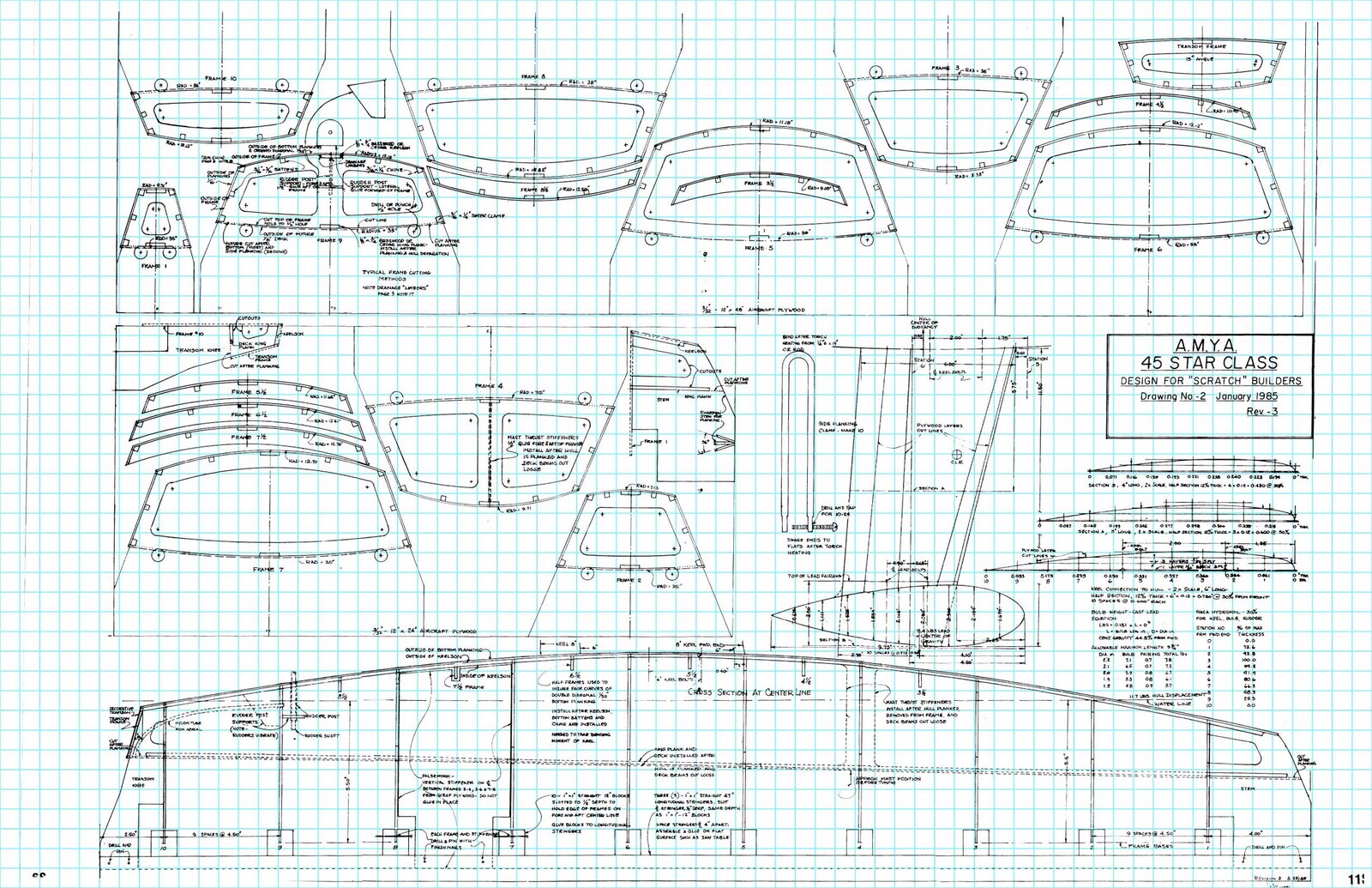
Do you find information about Small Boat Plans And Kits are you looking for? If not, below may help you find more information about the Small Boat Plans And Kits. Thank you for visiting, have a great day.
Read More..

Selasa, 15 Maret 2016

Boat Building Plans And Kits


Since I last blogged on this topic on Friday 13 June (Announcing it twice. Announcing it twice.), the promised new clause has been added to the Deregulation Bill. It was originally New Clause 21, but numbers are liable to change as further amendments are added to the Bill and, when I looked the other day, it had become Clause 34. I am making no guesses as to what the section number in the new Act will eventually be!

The clause is headed “Short-term use of London accommodation: power to relax restrictions”. It is purely an enabling power, so we still don’t know precisely how, to what extent, and indeed when, the government will relax the current rule on short-term lets in Greater London.

The new clause will give the Secretary of State power to make regulations by statutory instrument which will provide for the circumstances in which the use as temporary sleeping accommodation of any residential premises in Greater London does not involve a material change of use by virtue of section 25(1) of the Greater London Council (General Powers) Act 1973.

The regulations may also enable the Secretary of State or an LPA to direct that any provision included in those regulations will not apply to particular residential premises or to residential premises situated in a particular area. So there will be an opt-out which some of the London Boroughs will be eager to use (always assuming that power is not reserved to the Secretary of State to override the LPA’s direction, as he can in the case of Article 4 Directions).

The regulations may also in themselves amend the Greater London Council (General Powers) Act 1973, and there is a catch-all power that allows them to make different provisions for different purposes and/or include incidental, supplementary, consequential, transitional, transitory or saving provisions. This really does give the Secretary of State carte blanche.

So we are really none the wiser for having seen the new clause. Government press releases are not a reliable guide to what is really intended, or whether those intentions will in practice be achieved by the proposed regulations. Given the dire performance of civil servants in drafting subordinate legislation over the years, I am not confident that they will actually do what it says on the tin. Only time will tell.

I have already pointed out the dangers of substantially removing the existing restrictions in section 25(1) of the 1973 Act ( - see Short-term lets in Greater London posted on Tuesday, 25 February 2014), and I know that these concerns are shared by other commentators, such as Michael Bach, as set out in his article on this topic in the Summer 2014 issue of “newsforum”, the journal of the London Forum of Amenity and Civic Societies. Planning officers and others concerned with planning and housing throughout the Greater London area will be equally worried by the implications of the proposed changes.

For the time being, we have no choice but to wait and see what eventually emerges. There is at least one advantage of the method by which the government has chosen to deal with issue; a future government could use the enabling powers to restore the restriction on short-term lets in the capital without having to pass any amending primary legislation. Nice one, Sir Humphrey!

© MARTIN H GOODALL

Do you find information about Boat Building Plans And Kits are you looking for? If not, below may help you find more information about the Boat Building Plans And Kits. Thank you for visiting, have a great day.
Read More..

Kamis, 10 Maret 2016

Boat Plans Catamaran


Planning professionals whose practice includes dealing with residential property in Greater London will be aware of section 25 of the Greater London Council (General Powers) Act 1973 (as amended), which provides that for the purposes of what is now section 55(1) of the 1990 Act, the use as temporary sleeping accommodation of any residential premises in Greater London involves a material change of use of the premises and of each part of them that is used for that purpose. Use as temporary sleeping accommodation’ means use as sleeping accommodation which is occupied by the same person for less than 90 consecutive nights and which is provided (with or without other services) either for payment or by reason of the employment of the occupant.

The provision applies whether or not the relationship of landlord and tenant is created by this arrangement. So if used in this way, a residential property is no longer a single private dwelling within Use Class C3, but is a sui generis use. This has two consequences. First, it cannot be claimed in this case that the property should still be treated for planning purposes as a single dwelling, because the 1973 Act takes it out of that category. Secondly, it follows that a breach of planning control comprising this change of use is subject to the 10-year rule, rather than the 4-year rule.

The operation of this legislation was reviewed by the Court of Appeal in Fairstate Limited v. FSS [2005] EWCA Civ 283. The question at issue in this case (as Ward LJ put it in his judgment) was “what if any breach of planning control occurs where the use to which a London flat was put changed over three stages – (1) for more than ten years as temporary sleeping accommodation which made that unauthorised use lawful, but (2) with a change for about five months to longer-term residential occupation, and finally (3) reverting back for the next four years to temporary sleeping accommodation.”

It was common ground between the parties in that case that, at stage (1), use of the flat for temporary sleeping accommodation was a material change of use that had become a lawful use by virtue of section 191(2) of the 1990 Act. Nevertheless, it was held by the Court of Appeal that the change from stage (2) to stage (3) (from permanent back to temporary sleeping accommodation) was a further breach of planning control in respect of which enforcement action could be taken.

Now, according to a report in yesterday’s Evening Standard, ministers are proposing to scrap this provision, so as to allow short-term lets in Greater London (for example “for a few days while the owners go on holiday”). The demand for short-term accommodation during the 2012 Olympics has been cited as the sort of thing that ministers think ought to be catered for. The suggestion is being canvassed by Kris Hopkins, the recently appointed junior minister in De-CLoG who is responsible for housing.

The whole point of this 1973 legislation was to protect much-needed housing accommodation for permanent residents in the capital, and we are all well aware of the huge unmet demand for such accommodation. If a significant proportion of the available housing stock were to be used for holiday accommodation or other short-term lets, which may well prove more lucrative to property owners, this will only exacerbate an already dire shortage of suitable accommodation for workers in London.

No firm proposals have yet been put forward, and it remains to be seen if the government will press ahead with this idea. What do Mayor Bojo and his advisers think about it? I am sure that Shelter and others concerned with housing provision will have plenty to say on the subject. If the government does want to relax the rules in Greater London to some extent, the new rules would no doubt have to be carefully framed to avoid the loss of permanent residential accommodation in the capital. The limited type of temporary letting that Kris Hopkins was talking about might be an acceptable concession, but anything that would result in the permanent loss of residential accommodation should be avoided.

Offhand, I don’t know whether this was simply a kite-flying exercise on the part of Kris Hopkins, or the beginning of a consultation exercise, but if you own residential property in Greater London, don’t get too excited about these ideas for the time being – it may take some time before any definite proposals are formulated, if indeed the idea goes forward at all.

© MARTIN H GOODALL

Do you find information about Boat Plans Catamaran are you looking for? If not, below may help you find more information about the Boat Plans Catamaran. Thank you for visiting, have a great day.
Read More..

Boat Plans And Patterns


I have blogged on this topic several times in the past year, but I was wondering why the journos on the Evening Standard were getting excited on this subject in an article in today’s edition of the paper. The Deregulation Bill, which will enable the Secretary of State to relax the rules on short-term lettings in Greater London is still in the House of Lords, and the third day of the Report Stage is not due until Wednesday of this week, so Royal Assent is unlikely to be achieved until after both houses come back from their half term break after 23 February. By my calculation, that isn’t going to leave time for subordinate legislation to be laid before parliament so as to come into effect before the General Election (although I am open to correction on this, if any of you know better).

So what exactly prompted today’s article in the ES? I think it must have been De-CLoG’s publication today of a document entitled “ Promoting the sharing economy in London - Policy on short-term use of residential property in London”, which is yet another expression of the government’s wishful thinking, without actually telling us when we can expect the promised change to come about (if indeed it ever does, given the uncertainty over the likely result of the General Election).

The position today is, and will remain for the time being, that short-term lets (of less than 90 days) in Greater London are a material change of use (to a sui generis use) which requires planning permission. The ES seems to think that the change in the law is immediate, but it is not even imminent. That could conceivably change, but I am still not betting on its happening this side of the General Election; and what will happen after that is beyond the wit of man to foretell.

© MARTIN H GOODALL

Do you find information about Boat Plans And Patterns are you looking for? If not, below may help you find more information about the Boat Plans And Patterns. Thank you for visiting, have a great day.
Read More..

Kamis, 03 Maret 2016

Canoe Boat Plans


Royal Assent to the Deregulation Bill, together with a number of other Bills, was signified yesterday at the very last minute before parliament was prorogued. It has now therefore become the Deregulation Act 2015.

Contrary to original expectations (and the original drafting of the Bill), sections 44 and 45, amending section 25 of Greater London Council (General Powers) Act 1973 have not come into force on the passing of the Act, but must await a Commencement Order.

The Deregulation Act 2015 (Consequential Amendments) Order 2015 (SI 2015 No. 971), which was made and laid before parliament today (and I confess that I was unaware that this could be done after parliament had been prorogued) does not bring these two sections into force.

Parliament has been prorogued until Monday 30 March, which is the day on which it is due to be dissolved in any event, so I would be rather surprised if any further statutory instruments could be made and laid before parliament on Monday – but I am rapidly learning that the Whitehall sausage machine never stops churning out subordinate legislation, so we shall have to see what (if anything) emerges on Monday.

If, however, I am right in my long-held belief that the proposed amendment to the 1973 Act, which currently restricts short-term lettings in Greater London, could not be achieved before the General Election, then we shall have to wait and see what the ministers who are in office after 7 May will do about it (if anything). If no commencement order is ever made, this would certainly not be the first legislative provision that has languished on the statute book unimplemented.

© MARTIN H GOODALL


Do you find information about Canoe Boat Plans are you looking for? If not, below may help you find more information about the Canoe Boat Plans. Thank you for visiting, have a great day.
Read More..

Rabu, 02 Maret 2016

Boat Plans Pdf


NOTE: For completely up-to-date and fully comprehensive coverage of this subject, we would strongly recommend readers to obtain a copy of the author’s new book - “A PRACTICAL GUIDE TO PERMITTED CHANGES OF USE” published by Bath Publishing in October 2015. You can order your copy by clicking on the link on the left-hand sidebar of this page.

When I wrote my piece on the 56-day rule the other day, I queried the position where notification of the council’s determination of the prior approval application went out very close to the deadline, and so was not received by the applicant within the 56-day period. I am grateful to a correspondent for drawing my attention in this connection to an appeal decision in Tower Hamlets, issued on 24 June 2013 (APP/E5900/C/12/2182746).

This was an application for prior approval in respect of a telephone kiosk under Part 24. The inspector stated at the beginning of his decision letter that the authority had 56 days in which to give notice whether prior approval was required, and for the applicant to receive such notice. It appears to have been assumed without question in this case that a written notification sent within the 56 days but not received by the applicant within that time would not comply with the 56-day rule, so that the right to carry out the development then became automatic, notwithstanding the LPA’s decision and the purported notice of their refusal of the prior approval application.

Both parties agreed that the time within which the applicant should have received such notice expired on 26 December 2011. The authority sent out an undated letter on 23 December refusing prior approval. That letter was received by the appellant in the post on 29 December 2011, outside the 56-day period. However, a copy of this letter was also sent out by two emails at 4.32 p.m. on 23 December, one of which went to the email address given on the applicant’s headed notepaper, and was received by them on that day.

There can be no doubt that transmission of the letter by email to the applicant’s stated email address was an effective communication of the written notice of the LPA’s determination of the prior approval application, notwithstanding that the applicant had not confirmed on the application that they would agree to receive communications by email. Section 329(1)(cc) of the 1990 Act permits the service of a notice using electronic communications where an address for service has been given (as it had been by virtue of its being shown on the applicant’s headed notepaper).

The question, however, still arose as to whether the receipt of the email at or shortly after 4.32 p.m. on 23 December was actually in time. At first sight it seems obvious that it must have been. But there’s a catch!

The applicant relied on Section 336(4A) of the 1990 Act, which provides that where an electronic communication is used for the purpose of serving or giving a notice or other document on or to any person for the purposes of this Act, and the communication is received by that person outside that person’s business hours, it is to be taken to have been received on the next working day, and in this subsection, “working day” means a day which is not a Saturday, Sunday, Bank Holiday or other public holiday.

The inspector quite rightly drew attention to the words “that person’s business hours”. This does not mean ‘normal’ business hours, but the business hours which that person chooses to keep. Whilst it may be usual for offices to remain open until 5.00 or 5.30 p.m., some businesses do close down earlier on Friday afternoons and this was, of course, the last working day before the Christmas holiday, so it is not surprising that the applicant’s office closed down for Christmas before 4.30 on that day. In any event, if a person keeps business hours that are different from the norm, it is their own business hours which apply for this purpose.

In this case, therefore, the email of 23 December had been received outside the applicant’s working hours, and so (in accordance with section 336(4A)) it had to be taken to have been received on the next working day, which was Wednesday 28 December in this case, because Christmas Day fell on a Sunday and so there was an extra Bank Holiday on Tuesday 27 December. So the notification of the council’s refusal of prior approval was received outside the 56-day period after all, and on that basis the Inspector held the applicant had been entitled (as they did) to go ahead with the erection of the telephone kiosk.

I am not aware of this appeal decision having been challenged, but I note that whilst paragraph A.2(6)(a) of Part 24 refers to “the receipt by the applicant from the local planning authority of a written notice of their prior determination that such prior approval is not required”, sub-paragraph (b) uses the words “the giving of that approval to the applicant, in writing”, and sub-paragraph (c) uses the words “notifying the applicant, in writing, that such approval is given or refused”. Sub-paragraph (d) also uses the words “notifying the applicant, in writing, of their determination as to whether such approval is required”. So the only sub-paragraph that refers to the receipt of written notice by the applicant is (a), relating to a notification (at any time, but in practice within the 56-day period, because one of the other sub-paragraphs would otherwise apply) that prior approval is not required.

I am not totally confident that the inspector’s easy assumption that notification of the refusal of prior approval of the Part 24 application had to be received by the applicant within the 56-day period is necessarily correct. It seems that, so far as notice under sub-paragraphs (b), (c) or (d) is concerned, simply dispatching the notice to the applicant within the 56-day period might in fact meet the time limit, even if that written notification is not received within the 56-day period. If that is correct, then section 336(4A) will not have any application, because it is only relevant in those cases where it is the date of receipt of the notice that counts.

In paragraph N of Part 3, sub-paragraph (a) refers to “the receipt by the applicant from the local planning authority of a written notice of their determination that such prior approval is not required” and sub-paragraph (b) refers to “the receipt by the applicant from the local planning authority of a written notice giving their prior approval”. So far so good; but sub-paragraph (c) refers to “the expiry of 56 days following the date on which the application was received by the local planning authority without the authority notifying the applicant as to whether prior approval is given or refused”.

Which brings us back to the point where we started, with the query I first raised in my post on 9 February. I argued in that piece that sub-paragraph (c) of paragraph N should be interpreted, in the light of sub-paragraphs (a) and (b), as referring to the receipt of that notification by the applicant. But I am still not confident that the courts would agree with this interpretation if the point were ever to be argued before them. Telecoms companies seem to have taken an aggressive stance on this in relation to Part 24 and, in the absence of an adjudication by the High Court, they seem to have persuaded LPAs, and at least one inspector on appeal, that notification of the council’s determination of the prior approval application must be received within the 56-day period. Maybe we should proceed on this working assumption and hope that no LPA ever feels brave enough to litigate the point!

© MARTIN H GOODALL


Do you find information about Boat Plans Pdf are you looking for? If not, below may help you find more information about the Boat Plans Pdf. Thank you for visiting, have a great day.
Read More..

Selasa, 23 Februari 2016

Boat Plans Canada


In an adjournment debate on National Parks in the House of Commons on Monday 24 February, a number of MPs expressed their concern about the proposed permitted development for barn conversions, on which the government consulted last year, and for which an amendment order to the GPDO is expected within the next few weeks. Members also expressed concern about such developments in AONBs.

In replying to the debate, the planning minister, Nick Boles said that, having set out the broad case for introducing a permitted development right in the country that would make it easier to convert agricultural buildings into homes, it is now entirely legitimate to ask whether it would be appropriate to extend that right to national parks and areas of outstanding natural beauty or, in planning jargon, Article 1(5) land [which, incidentally, also includes Conservation Areas, the Broads and World Heritage Sites].

Boles told the House that De-CloG has undertaken “a genuine consultation” on the issue, and he pointed to the fact that in other areas where the government has introduced an extended permitted development right, they had listened to the concerns raised and modified the original proposals. He said that his department has listened to the very powerful and very persuasive arguments made, and they are genuinely taking them fully into account in reaching their final conclusion on how this permitted development right should work.

In conclusion, the minister hoped that he had explained that the intention behind the proposed permitted development right is to bring forward more housing on land that is already developed, and to make maximum use of the buildings that our ancestors saw fit to build, so that we do not have to put up any more buildings on green fields than is necessary to meet our housing and other needs. The government recognises, however, that national parks and areas of outstanding natural beauty are designated for a reason and have a special status. The government would think hard about this and listen to the arguments put to them about the appropriateness of this measure in those areas. Although the minister could not anticipate the Government’s final position, he re-assured the House that the Government have heard the arguments loud and clear.

This seems to be a fairly clear hint that the PD rights for barn conversions (and the conversion of other agricultural buildings) to residential use may well be excluded in National Parks and AONBs, and possibly also in rural Conservation Areas and other sites covered by Article 1(5) of the GPDO. On the other hand, it seems clear that the government is still intent on proceeding with these permitted development proposals, and so we should know within a few weeks exactly what form this new permitted development right will take.


UPDATE: The amendment order was made on 10 March 2014, laid before Parliament on 13 March and will come into force on 6 April. See now the post I published on 17 March 2014 (“Barn conversions – the new rules”).

NOTE: There have been significant changes to the law since this blog post was published, and so the material printed here (including the appended comments) does not accurately reflect the current position. For completely up-to-date and fully comprehensive coverage of this subject, we would strongly recommend readers to obtain a copy of the author’s new book - “A PRACTICAL GUIDE TO PERMITTED CHANGES OF USE” published by Bath Publishing in October 2015. You can order your copy by clicking on the link on the left-hand sidebar of this page.

© MARTIN H GOODALL

Do you find information about Boat Plans Canada are you looking for? If not, below may help you find more information about the Boat Plans Canada. Thank you for visiting, have a great day.
Read More..