Tampilkan postingan dengan label put. Tampilkan semua postingan

Senin, 14 Maret 2016

Kayak Boat Plans


As I mentioned in a post a few weeks ago, there’s rather a lot of catching up to do after a very eventful month in the planning world. The government reshuffle on 7 October left Eric Pickles in place for the foreseeable future as De-CLoG’s Secretary of State. Planning minister Nick Boles also remains in post, and so the two key figures on the planning front are still in charge.

Most of the other changes among the ministerial team at De-CLoG don’t impact directly on planning, but among new junior ministers who also have some involvement in town planning in its wider sense there are (in no particular order) Kris Hopkins, who is the housing minister and has also been given specific responsibility for planning policy and casework relating to wind farms, Stephen Williams, who will cover (among other things) localism, decentralisation and community rights, building regulations and standards, empty homes, climate change and sustainable development, and Brandon Lewis, whose remit includes high streets, town centres and markets, travellers and community assets (such as pubs).

Although no further primary legislation on planning seems to be in the pipeline, De-CLoG still has an ambitious programme of ‘deregulation’, the nature and effect of which may prove to be a bit patchy. Some of the changes that have recently been introduced (in a slough of statutory instruments that came into force on 1 October) or are in the offing will be welcome, but others may cause difficulties for users of the planning system that might best have been avoided. I really must find time to get my head round these changes and get properly to grips with them, not least the recent changes to appeal procedures. I’ll blog on all these topics when I get the chance.

© MARTIN H GOODALL

Do you find information about Kayak Boat Plans are you looking for? If not, below may help you find more information about the Kayak Boat Plans. Thank you for visiting, have a great day.
Read More..

Minggu, 06 Maret 2016

Boat Plans Wood


Enforcement action against breaches of planning control has always been the Cinderella of the planning service in most planning authorities, and the squeeze on council budgets has only served to further weaken local councils’ exercise of their enforcement powers. It can be a very expensive exercise, especially if the enforcement action is simply ignored by a recalcitrant developer, so that the council has to resort to applying for an injunction.

Now, however, albeit rather late in the day, De-CloG has announced a new fund to give LPAs some financial help in dealing with proceedings for injunctions in planning cases. Of course, if local authority funding had not been cut in the first place, this extra financial support might not have become necessary, but no doubt it will be welcomed by any hard-pressed authority having to go for an injunction against a persistent breach of planning control, or at least it may be until they read the small print.

The fund provided by De-CloG is £1 million, of which £200K will be available between now and 31 March this year, and the remaining £800K will be available until 31 March 2016. However, this funding is not as generous as it sounds. The maximum grant for any one case is limited to not more than half the council’s estimated costs, but is limited to a maximum payment of £10K.

So the maximum amount of grant that an LPA can apply for is £10,000 (or 50% of their estimated legal costs, whichever is the lesser) towards the cost of securing a Court Injunction in the High Court or County Court. The authority is required to provide a costs estimate setting out details of anticipated legal costs likely to be incurred in preparing and issuing legal proceedings and attending court, but this estimate is not to include non-legal specialist officer time. The LPA must take responsibility for any legal costs incurred in excess of £10K or in excess of any lesser sum that may be granted.

The fund is solely for use by LPAs in England, towards the cost of securing a Court injunction (High or County Court), under Section 187B of the Town and Country Planning Act 1990, against actual or apprehended breaches of planning control to be restrained. Funding is only available where other enforcement options have been, or would be, ineffective, or where there have been persistent breaches of planning control over a long period.

Funding will not be available for court proceedings which have already been started, or where an appellant lodges an appeal under section 174 against an enforcement notice that the LPA has issued. The criteria refer to an appeal made “within 28 days of receiving the notice”, but as the notice will usually come into effect within a fairly short time after the minimum 28-day period, it seems a little odd that an LPA could be deprived of funding for injunction proceedings where an enforcement notice is timed to come into effect (say) 35 days after service, and the developer appeals after 28 days but within the 35-day period.

LPAs will have to jump through hoops to get the funding they are seeking. Before a grant is made, they will have to demonstrate why the action is in the general interest, explain the degree and flagrancy of the breach of planning control, set out the enforcement history for the site (e.g. what other measures have failed over a long period of time), explain any urgency needed to remedy the breach, set out the planning history of the site, provide details of previous planning decisions in relation to the site, set out consideration of the Public Sector Equality Duty (section 149 of the Equality Act 2010) and Human Rights Act 1998, and demonstrate that an injunction is a proportionate remedy in the circumstances of the individual case, in addition to stating the amount of funding requested, including a breakdown of estimated legal spend on legal costs in 2014-15 and 2015-16. And all of this must be written in no more than 1,000 words, writing on one side of the paper only in the Head of Planning’s best joined-up handwriting. Deductions from funding will be made for untidy handwriting, poor grammar and spelling errors. (OK – I made the last bit up, apart from the thousand-word limit, but you get the general drift.)

And that’s not all. To qualify for consideration, the authority is required to confirm that it has adopted the enforcement best practice recommended in paragraph 207 of the National Planning Policy Framework and published its plan to manage enforcement of breaches proactively. The authority’s enforcement plan must have been published at least three months prior to applying for grant and the authority is required to confirm adherence to the recommendations of the National Planning Policy Framework with regard to the way in which the authority monitors the implementation of planning permissions, investigates alleged breaches of planning control; and takes enforcement action whenever it is expedient to do so.

Finally, to support the application for funding, the authority will be required to provide an active web link for their published local enforcement plan together with written confirmation that they are adhering to the objectives of the plan in a positive, pro-active and proportionate way and have been doing so for at least the previous three months.

Contractors engaged by De-CLoG (Ivy Legal) will assess applications for funding against the eligibility criteria in January, April, July and October, and applications for grant must be received no later than the last working day of the relevant application month.

You might think that someone in De-CLoG is trying to make it difficult, if not practically impossible, for local authorities actually to get their hands on this money! I wonder what level of take-up there is going to be when the amount of work involved in applying for funding, and the sum that is likely to be doled out, are taken into account. Getting funding might prove to be more difficult than getting the injunction itself, and many LPAs may conclude that it’s not worth the hassle.

© MARTIN H GOODALL


Do you find information about Boat Plans Wood are you looking for? If not, below may help you find more information about the Boat Plans Wood. Thank you for visiting, have a great day.
Read More..

Sabtu, 27 Februari 2016

Canoe Boat Plans


One of the concepts carried through into the NPPF from the former PPG2 is that those types of development that are ‘inappropriate’ in the Green Belt should not be permitted. Paragraphs 89 and 90 of the NPPF indicate types of development that are inappropriate in the Green Belt, and those that may be appropriate in the Green Belt, provided that the openness of the Green Belt is preserved and there is no conflict with the purpose of including the land in the Green Belt.

In Fordent Holdings Ltd v SSCLG [2013] EWHC 2844 (Admin) the High Court was called upon to consider whether the prohibition on ‘inappropriate’ development extended not only to built development of the types listed in paragraph 90 but also to changes of use to any of the uses within those same categories. The developer challenged an appeal decision on the grounds (among others) that the inspector was wrong to conclude that a change of use from agricultural use to outdoor sport and recreation was inevitably inappropriate development and thus not to be permitted in the absence of very special circumstances, and that the Inspector was wrong to conclude that Paragraph 89 of the NPPF did not apply to changes of use.

The first point that the Deputy Judge made is that “development” as used in the NPPF has the same meaning as the definition of that term in section 55 of the 1990 Act, and this relates not just to operational development but also includes a material change of use. It follows that a material change of use is capable of being inappropriate development within the meaning of Paragraph 87 of the NPPF.

The policy set out in paragraph 3.12 of PPG2 in relation to Green Belt development has not been carried through into the NPPF. The effect of Paragraphs 87, 89 and 90 of the NPPF, when read together, is that all development in the Green Belt is inappropriate unless it is either development falling within one or more of the categories set out in Paragraph 90 or is the construction of a new building or buildings that comes within one of the exceptions referred to in Paragraph 89.

Paragraph 90 contemplates not merely the construction of buildings but other development as defined by section 55 of the 1990 Act falling within the identified categories. Thus a change of use falling within one of the categories identified in Paragraph 90 is in principle capable of being not inappropriate. That being so, the Deputy Judge did not agree with the Inspector that no material changes of use fall or are capable of falling within Paragraph 90. The concept of development includes a material change of use and therefore a change of use for example to permit mineral extraction is capable of being not inappropriate providing that the change of use preserves openness and does not conflict with the purposes of including land in the Green Belt.

The real issue, therefore, is whether development in the form of a material change of use outside the categories identified in Paragraph 90 must by definition be inappropriate development or whether such a change of use has to be considered on its merits, with a decision to be taken as to whether it is inappropriate or not inappropriate development, as was the position under PPG2.

As noted above, the structure of the Green Belt policy has changed compared with the former PPG2, as a result of which there is no general exception for changes of use that maintain openness and do not conflict with the purposes of the Green Belt. Paragraph 90 contains a closed list of classes of development that are capable of being not inappropriate and Paragraph 89 contains a closed list of classes of new building construction not falling within Paragraph 90 that are not or may be not inappropriate by way of exception to the general rule that the construction of new buildings is to be regarded as inappropriate in the Green Belt. The Deputy Judge observed that, whilst it is true to say that the reference to "other forms of development" and the use of the word "other" in Paragraph 90 suggest that there are forms of development other than those listed in that paragraph that are capable of being not inappropriate, he considered that those words and phrases refer back to the exceptions listed in Paragraph 89.

Paragraph 89 is exclusively concerned with the construction of new buildings. It does not apply and is not expressed to apply to any other form of development. The word and phrase in the opening lines of Paragraph 90 that were relied on by the developer do not undermine this analysis, and do not lead to the conclusion that other forms of development not listed in Paragraph 90 and not capable of coming within the scope of Paragraph 89 are nonetheless capable of being development that is not inappropriate. If that was so then Paragraph 90 would not have been drafted in the way it has been drafted (as a closed list of classes of development that is not inappropriate). Contending otherwise, his lordship held, applies an over legalistic approach to the construction of a policy statement. When Paragraph 87, 89 and 90 are read together, as they should be, the meaning is clear. Development in the Green Belt is inappropriate (and thus can be permitted only in very special circumstances) unless it falls within one of the exceptions identified in Paragraphs 89 and 90.

On the second ground of challenge, the developer submitted that the Inspector failed correctly to construe Paragraph 89 because he decided that the word "it" in the second bullet point was a reference to the facilities element of any proposal when it should have been construed as applying to the relevant use relied on – i.e. outdoor sport or recreation or cemeteries. The Deputy Judge did not agree. The purpose of the exceptions to the general rule set out in the first sentence of Paragraph 89 is to distinguish between those types of new buildings which would be inappropriate if built in the Green Belt from those that are not. Some types of building are not further qualified. A new building for agriculture or forestry is not inappropriate. The provision of facilities for outdoor sport, outdoor recreation and cemeteries on the other hand is only potentially not inappropriate. Such a facility will only be not inappropriate development if it "… preserves the openness of the Green Belt and does not conflict with the purposes of including land within it…". If these further requirements are not made out then the proposed buildings will not fall within the exception and will fall within the general rule.

The Deputy Judge relied on the analysis of Ouseley J in Europa Oil and Gas Limited v. SSCLG [2013] EWHC 2643 (Admin) where he said:

"Secondly, as Green Belt policies NPPF 89 and 90 demonstrate, considerations of appropriateness, preservation of openness and conflict with Green Belt purposes are not exclusively dependent on the size of the building or structures but include their purpose. The same building, as I have said, or two materially similar buildings; one a house and the other a sports pavilion, are treated differently in terms of actual or potential appropriateness. The Green Belt may not be harmed necessarily by one but is harmed necessarily by another. The one is harmed by because of its effect on openness, and the other is not harmed by because of its effect on openness. These concepts are to be applied, in the light of the nature of the particular type of development."

Thus in each case it will be for the decision maker to apply this approach in order to decide whether a particular building which is claimed to provide appropriate facilities for outdoor sport or recreation to decide whether what is proposed preserves openness and does not conflict with the purposes of including land within the Green Belt. applying these principles. If it does, then what is proposed will come within the potential exception created by the second bullet point in the list in Paragraph 89. If it does not, then it will fall within the scope of the first sentence of that paragraph and can be permitted only if very special circumstances are made out.

The Deputy Judge considered that very special circumstances will have to be shown for a change of use to Green Belt land not falling within one of the classes identified in Paragraph 90 of the NPPF. If that is so, there is no logic in requiring very special circumstances to be shown, for example, for a change of use from agricultural land to an open sports ground (where the impact on openness is likely to be less than the facilities to be constructed in connection with the changed use) but not applying the same constraint to facilities to be constructed at such a site if a change of use is permitted, as long as the requirement in the second bullet point within Paragraph 89 that a facility should preserve the openness of the Green Belt and not conflict with the purposes of including land within it is read in the way referred to by Ouseley J in Europa Oil and Gas. Merely because Green Belt land is used for outdoor sport or recreation does not justify permitting the construction of a building or buildings that fail to preserve the openness of the Green Belt or conflict with the purposes of including land in the Green Belt, applying the approach to these concepts identified by Ouseley J in Europa Oil and Gas.

The Deputy Judge added that there is another obvious reason for adopting this approach. If a promoter of a scheme was able to obtain permission to change the use of agricultural to an open sporting ground he might well wish to construct or add to facilities in subsequent years. There would be great danger in not requiring very special circumstances to be demonstrated for future applications for the provision of facilities at existing outdoor recreation or sporting sites in the Green Belt. The construction which his lordship considered is appropriate eliminates that risk as long as the requirements imposed by the second bullet point in Paragraph 89 to preserve the openness of the Green Belt and avoid conflict with the purposes of including land in the Green Belt are read subject to the qualifications referred to by Ouseley J in Europa Oil and Gas.

© MARTIN H GOODALL
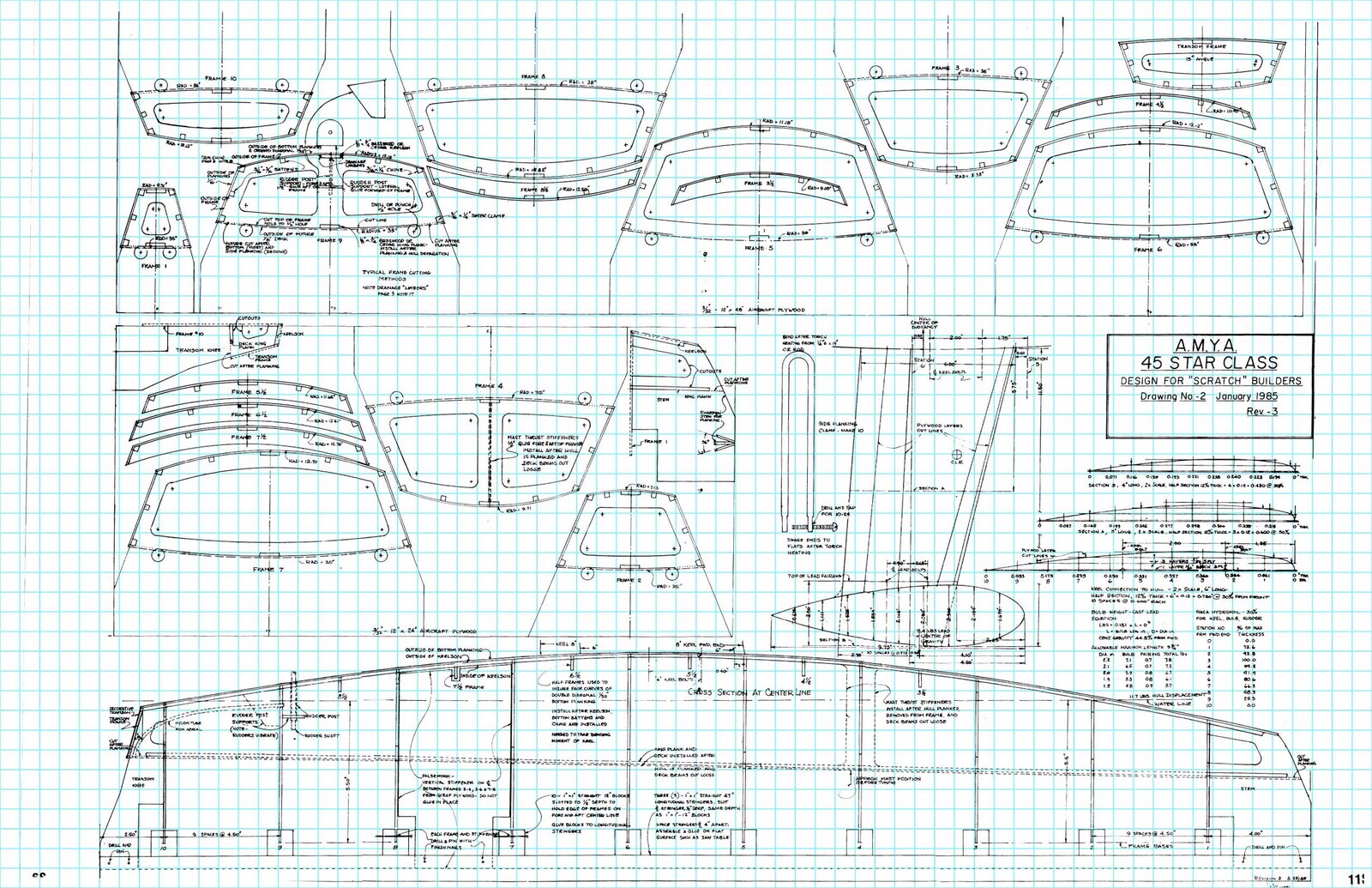
Do you find information about Canoe Boat Plans are you looking for? If not, below may help you find more information about the Canoe Boat Plans. Thank you for visiting, have a great day.
Read More..

Jumat, 19 Februari 2016

Boat Plans Stitch And Glue


In the interval between Christmas and the New Year, De-CLoG sneaked out its “Ninth Statement of New Regulation: January to June 2015”, which (if what it says on the tin is to be believed) lists all the subordinate legislation that De-CLoG ministers intend to bring into force between 1 January and 30 June 2015. The word “all” is not actually used in the document, but it is reasonable to assume that if the government had a firm intention to introduce any other measures before the General Election they would have been included in this document.

The statement is therefore unintentionally revealing in having omitted a number of significant planning changes which were loudly trumpeted by ministers last year, and which would certainly have been included in the list of forthcoming measures if the government still intended to bring them forward before the General Election.

Among the previously proposed changes about which the document is deafeningly silent are further amendments to the GPDO to enable more changes of use in addition to those previously introduced within the past two years. These were expected to include the change of use of light industrial units (B1(c)), warehouses and storage units (B8) and some sui generis uses (launderettes, amusement arcades/centres, casinos and nightclubs) to residential use (C3), and changes of some sui generis uses to restaurants (C3) and leisure uses (D2).

There is no mention, either, of the government’s intention to make permanent those permitted development rights which currently expire in May 2016. We had been promised that the existing time limit for completing office to residential conversions would be extended from 30 May 2016 to 30 May 2019. It doesn’t look as this is going to happen this side of the General Election. The same applies to the right to build larger domestic extensions (under Part 1), currently expiring in May 2016.

Another measure that it seems will not be coming forward is the right to make alterations to shops, so as to allow retailers to alter their premises, plus additional PD rights covering (among other things) further extensions to houses and business premises, over and above existing permitted extensions.

Turning to the Use Classes Order, there is no mention of the proposed merger of Use Classes A1 and A2 in a single new ‘town centre’ use class. This was expected to be accompanied by a further amendment of the GPDO to allow change of use to the widened retail (A1) class from betting shops and pay day loan shops (A2), restaurants and cafés (A3), drinking establishments (A4), and hot food takeaways (A5). Similarly there is no mention of the intended restriction of the scope of the current A2 use class, so that betting offices and pay-day loan shops (both currently falling within this Use Class) would become sui generis uses.

Another measure of which no mention is made is the suggested increase in floorspace in a building in retail use (including the introduction of mezzanine floors), currently limited to 200 sq m, that can be made without its coming within the definition of development under section 55 (and therefore requiring planning permission). [I thought the original provision in the 2004 Act had been brought into force with effect from 10 May 2006, but I haven’t been able to put my finger on the SI which confirmed this limit, and have begun to wonder whether this provision in the 2004 Act is actually in force. Perhaps someone can enlighten me.]

There is one measure (relating to a proposed reduction in qualifying time for the Right to Buy scheme) which has been pencilled in for April 2015, but is flagged up as being “dependent on the Deregulation Bill”. The same would apply to the previously announced intention to relax section 25(3) of the Greater London (General Powers) Act 1973, so as to allow some types of short-term lettings in Greater London that are currently prohibited by that sub-section of the 1973 Act. But in this case, there is no mention of the proposed measure in the De-CLoG statement. Is this another measure that has bitten the dust?

Perhaps it was the realisation that these various measures could not now be brought forward before the General Election that led to George Osborne refraining from re-announcing them yet again in his Autumn Statement.

In Cloud-cuckoo-land, where Tory members of our coalition government seem to live, it is confidently expected that the government will be able to introduce these various measures after the General Election, and in the meantime they will no doubt feature as commitments in the Tory Party election manifesto. In the real world, where the rest of us live, the survival of the present government after May seems a little less than probable. An incoming government of a different political composition may not wish to continue with these proposals, and so this may be the end of the road for the present government’s planning ‘reform’ agenda.

UPDATE: I am grateful to Sally Davis of G L Hearn and to Ray Tutty of Savills, both of whom kindly emailed me with a note of the provision that I had been unable to find, which specifies the limit for internal enlargements of retail floorspace. This was Article 4 of the Town and Country Planning (General Development Procedure) (Amendment) (England) Order 2006, which inserted Article 2A in the original DMPO stating that the amount specified under section 55(2A) of the Act is 200 square metres. Any change in this floorspace limit would therefore be by means of a further amendment of the DMPO. It would still be possible for this change to be made in the time available, but its omission from the statement of forthcoming subordinate legislation suggests that the government may not see it as a priority.

NOTE: As readers are no doubt well aware, the coalition government did manage at the last minute to make the promised changes to the GPDO. For completely up-to-date and fully comprehensive coverage of this subject, we would strongly recommend readers to obtain a copy of the author’s new book - “A PRACTICAL GUIDE TO PERMITTED CHANGES OF USE” published by Bath Publishing in October 2015. You can order your copy by clicking on the link on the left-hand sidebar of this page.

© MARTIN H GOODALL


Do you find information about Boat Plans Stitch And Glue are you looking for? If not, below may help you find more information about the Boat Plans Stitch And Glue. Thank you for visiting, have a great day.
Read More..