Tampilkan postingan dengan label in. Tampilkan semua postingan

Selasa, 22 Maret 2016

Boat Plans Building


IT’S HARD TO EXPLAIN to a landlubber what offshore sailing is all about. But William G. Homewood found a way to do it, after he had raced from Newport, Rhode Island, to Bermuda and back in a Ranger 26.

This is his description, as recorded in Richard Henderson’s book, Choice Yacht Designs:

“First, at home, you should go into the bedroom fully dressed and pour a bucket of water over your head. Put on your foul-weather gear and harness.  Prop up one side of the bed to an angle of 20 degrees, then pour a bucket of water over the pillow and bedding.

“Engage the services of a fork-lift (and operator) who will lift one corner of your house up into the air six feet and then let it drop down with a bang.  He should do this all night long, intermittently, without warning. Now, go to bed.

“After one hour of sleep it will be time to get out of bed, open the sliding door to the balcony, and peer out (checking the sails). At this moment a friend, well hidden, should throw a bucket of water onto the back of your head. Your jacket hood must be in the off position, as this will allow the water to run down your neck. . . .  As  you turn to go back into the bedroom, another well-hidden friend should club you over the head with a two-by-four. This simulates head blows from the  bulkheads. . . .”

There’s more that a landlubber needs to know, of course. You should fill your rubber boots with water and you should remember to throw up only on the lee side of the cockpit. You should preferably practice walking with one leg shorter than the other so as to remain upright on the slanted deck and you should develop arms like a gorilla’s so you can hang on to the handholds when a wave tries to wash you overboard.

You should also practice holding your bladder for at least eight hours because it’s impossible to get a hand on the outlet from your urinary tract when you’ve got a whole bunch of layers of clothing and waterproof pants on.

As for cheerful, sustaining hot meals — um, well, sorry feller. Ain’t gonna happen.

Today’s Thought
We have all sinned and come short of the glory of making ourselves as comfortable as we easily might have done.
— Samuel Butler the Younger, The Way of All Flesh

Tailpiece
Adolescence is a period of rapid change. Between the ages of 12 and 17, for instance, a parent can age as much as 20 years.

(Drop by every Monday, Wednesday, Friday for a new Mainly about Boats column.)


Do you find information about Boat Plans Building are you looking for? If not, below may help you find more information about the Boat Plans Building. Thank you for visiting, have a great day.
Read More..

Senin, 21 Maret 2016

Boden Boat Plans Australia


A few months ago my wife showed me a picture of a wooden bowl from a catalog and asked me if I could create something similar. I had a concept in my mind that I thought I would try "someday", so this was the opportunity to use it. I quickly drew and fabricated a bowl to prove the technique. It came out okay, so I made some bowls slightly bigger, realizing that bigger was actually easier when laminating and sanding the inside. Then she asked for a longer, more flared design, and I made several of those, including for a friend who liked the design. Well, as one who enjoys designing and building boats, you may guess what happened next. I took the design for the next boat I plan to build and simplified and scaled it to create a "boat bowl".


Do you find information about Boden Boat Plans Australia are you looking for? If not, below may help you find more information about the Boden Boat Plans Australia. Thank you for visiting, have a great day.
Read More..

Small Boat Plans And Kits


THE WAY OF A SHIP in the sea is not as great a mystery as the Bible makes it out to be. Most of us can understand that a boat left to its own resources in heavy seas will tend to adopt a position that’s roughly broadside on to the wind.

Most keelboats will settle that way, and be quite happy, when all sail is taken down. Often, there’s a tendency, especially with sloops, for the bow to drift downwind a bit, which causes the hull to gather way and forereach. You can counteract that by lashing the helm to leeward, so that every time she tries to go forward the rudder will point her up into the wind and stop her in her tracks.  This is known as lying ahull, and works fine until conditions get so bad that your boat is being lifted by large breaking waves and hurled bodily down to leeward.

Most of us can also understand that things would be better if the boat could be made to lie with the pointy end facing the oncoming waves. Then she’d be presenting a much smaller area to the force of breaking waves, and she’d be much more difficult to overturn.

The question is how do you keep her facing that way in heavy weather without the help of an engine?  If you can keep the bow still in the water, then of course she will lie downwind as if she were made fast to a post. The sea anchor, made fast at the bow, is designed to do that, to act as a post, although it’s a post that actually moves very slowly through the water. But while it works well for boats with even, shallow draft, the sea anchor won’t keep a normal keel boat pointed into the waves, no matter whether it’s a fin keeler or a full keeler.

The Pardeys, a well known and very experienced cruising couple, claim to have kept their 29-footer pointing more or less into the waves by setting a sea anchor from a bridle, with one end of the bridle attached to the bow and the other to the stern. By taking up slack on one end of the bridle or the other, you can  of course alter the way the boat lies.

I’ve never tried this, but I have serious doubts whether normal people could manage this trick. For a start, I can’t imagine how I would be able to drag a sea anchor with its mass of small lines and its 25- to 30-foot spread of parachute material across the deck and over the side to windward in a heavy gale.

So I have never tried to lie bow-on to the waves in heavy weather. My method, in a full-keeler, is simply to lie ahull with the tiller lashed to leeward, until things get too dicey, and then to run off downwind under a storm job or bare poles. You need lots of sea room to do that, of course. A fin keeler is best kept moving at all times, but this needs a fit crew.

Some boats will lie about 45 to 60 degrees off the wind with the help of a special storm mainsail. It’s cut so that a lot of its area is aft of the boat’s underwater pivot point, the center of lateral resistance, so that it tries to point her up into the waves all the time.  But most boats these days don’t come equipped with a storm main, and few of us realize that using a third reef in the working mainsail instead doesn’t cut it, because that actually moves the sail’s center of effort farther forward, instead of aft where you want it.

 Anyway, the only real way to sort out this problem is to go out in bad weather and experiment with your own boat. The best way would be to persuade some experienced sailor with a sister ship to take you offshore, hunting for a storm, and watch what he or she does to cope with heavy weather. But I’d say your chances of pulling that off are rather slim.

Today’s Thought
Everybody talks about the weather, but nobody does anything about it.

— Charles Dudley Warner, Editorial, the Hartford Courant, c. 1890

Tailpiece

Overhead at a Boy Scout meeting:

“Did you ever have one of those days when you felt just a little untrustworthy, disloyal, unhelpful, discourteous, cowardly, and antagonistic toward those wretched old women who always wait for suckers to help them across the goddam road?”

(Drop by every Monday, Wednesday, Friday for a new Mainly about Boats column.)


Do you find information about Small Boat Plans And Kits are you looking for? If not, below may help you find more information about the Small Boat Plans And Kits. Thank you for visiting, have a great day.
Read More..

Boat Building Plans And Kits


The look on your face when you get a new rod

The fun begins with your first purchase. Youre ready to buy a fly rod. Most will experience one of three possible scenarios.


1) You find yourself in a large outdoor chain store with plenty of things to buy but no help to see you through a good decision.

2) You find yourself in a upscale fly shop where the sales staff proceeds to make you feel inferior and unworthy of the sport.

3) You come across a yard sale or hand me down rod that is always the best ever according to the previous owner. Trust me. Its rare to find any worth $$$ in a yard sale. I know because I look for them.

I didnt intend to start off this article sounding cynical but I bet if many of you would comment with your stories many of them would match one of these three descriptions.

Too Many Choices

Too Many Choices

Lets start with import or USA built.We can discuss this subject from many different angles - heres the facts

USA Built 

Pros - The best fly rods are built in USA. All USA built fly rods are hand crafted. Most if not all USA built rods come with some kind of lifetime warranty. Most have good resale value.
Cons - Expensive! Cost of USA manufacturing, research and development, advanced materials technology that makes these rods the best come at a high price.
Summary - If you become passionate about fly fishing you will own USA built fly rods. What comes with these rods is a sense of pride. Hard to have that feeling for something imported from an overseas factory. I have had the pleasure of visiting many USA rod manufacturer facilities. I like knowing that the hands that built my rods also are as passionate about fishing as I am. Its a feeling you cannot put a price on.

Imported fly rods

Pros - Value per dollar. Good entry level options. Some have lifetime warranty (although you may end up with a different rod than what you started with). Also some very good quality rods for much less than USA built price.
Cons - Hard to tell good from bad. Here today and gone tomorrow.
Summary - There is some really good import rods on the market and they catch fish just like a USA built rods. But the import business tends to flood the market and makes it hard to sift through whats Great, Good, OK or just plain cheap rods. Resale value of imports is weak and often times you cant give them away. I also notice that many come with catchy names to help sell them but not a good description of what the action is, so often you find someone purchased a rod only to find out it is a poor fit for their casting ability or the fishing they are doing.

Premium Picks - 

Sage One

Winston BIIIx

G.Loomis NRX Lite Presentation

All of these rods are beautiful and powerful tools for fishing. Each has great power coupled with very intuitive feeling that will help any angler progress down the path of good casting. Excellent resale value and the industry leading warranty service also add to their value. I should note here that rods like these hold their place in history for years to come.

Mid Line Winners - 

G. Loomis Pro4x
Winston Nexus


Echo 3
Sage ACCEL

These models range in price from about $300 to $595. Winston, G. Loomis and Sage are built in USA. All have lifetime warranty. All of these rods offer excellent performance and value. They could go with you on a lifetime of fishing and you would enjoy them for years to come.

Entry Level Values - Imports

Redington Classic Trout
Echo Solo


Redington Crosswater


Classic Trout and Solo offer lifetime warranty. One year on the Crosswater. I am real fond of the Classic Trout. Its a moderate action easy to cast really good trout rod for the price. The Echo Solo is also a good choice and at $119 with lifetime warranty its hard to beat.


Outfit Options

An outfit is an easy way to get Rod, Reel and Line all in one purchase. 

Sage Approach Outfits


Redington Minnow 
Made for Kids-Loved by Adults


Redington Topo Outfit - Complete ready to fish


Echo Solo Outfit - Great Value


Two Hand (Spey) Rod Choices

No reason one has to start out with a single hand fly rod. If you live in steelhead country just go ahead and jump to a two hand. Ive seen too many beginners get a single hand 8wt only to come back in a month and say I want a two hand rod. I think two hand casting is harder to learn on your own but with a good instructor like Tom Larimer of Jeff Hickman you will soon be on your way to fishing success! Learning single hand casting first is not a prerequisite. The rods I choose are all pretty moderate action and not only do they fit beginners well they are also a great action for skagit style two hand casting.

Winston Boron III TH
G.Loomis Pro4x
Sage ACCEL Two Hand


Redington Dually


Echo Dec Hogan II

Sum it up

A popular quote around the fly shop is "if you dont want to buy a more expensive rod than dont cast a more expensive rod." Even a person just starting out with some basic casting skills can feel the difference from these different levels of rods. That doesnt mean they catch more fish, they just cast better and make you feel like a hero. I know plenty of anglers that catch plenty of fish on $89 Crosswater rods. This works on the premise that if you want to catch fish you will use what you got! Spending more on a rod doesnt guarantee you more fish. What I can almost certainly guarantee is if you embrace to sport of fly fishing you will own premium USA built fly rods. Its inevitable!

The way I weigh the options is in one of three choices - 

Buy Top Shelf- You work hard for your money and when you have time off you deserve to enjoy it. Great pride comes with the best rods and you find yourself taking great pride in your fishing. Long after your gone when your grand kids find your fly rod hidden among your treasures theyll know how much it meant to you by the way you took care of it.

Buy middle of the road knowing that youll get a great rod you can own a lifetime or maybe it will be the first and last rod you buy. I know anglers that only fish their home waters. They usually will fish a dry fly if fish are raising and if not they switch to a nymph rig. One rod can do both methods therefore they only need one rod. They only fish a few days a year and enjoy it as much as anyone. Some of todays mid line rods are a recent yesterdays premium rod.

Buy cheap now knowing that youll upgrade in the future - Its nice to have a cheapy around for yard casting or letting your buddy or kid have a swing...Hard to hand over your several hundred dollar investment and watch a novice thrash it.

Dont fret over making a wrong choice. There are no wrong choices just future choices and Gorge Fly Shop will be here to help you make that choice whether you buy one or a hundred rods. 


Greg Darling 
Gorge Fly Shop Internet Sales Manager | Product Specialist


"Fly Fish the World with Us"


Do you find information about Boat Building Plans And Kits are you looking for? If not, below may help you find more information about the Boat Building Plans And Kits. Thank you for visiting, have a great day.
Read More..

Minggu, 20 Maret 2016

Boat Plans Aluminum


Most of the Fly Fishing industry moves along day to day, year after year following a standardize path of success. Somewhat boring and true! There comes a time when every product starts to look the same and your vision gets blurred. Just when youre about to schedule an eye exam something new comes into focus and you reach a conclusion that a different way of thinking is all you needed to correct your vision. 


To find a Different Way of Thinking all you have to do is look to the anglers who live their lives everyday doing what drives their passion. This is where you will find the latest franken flies, basement lines and a collaboration of out of the box thinking that happens with a drink in hand after long days on the river with like minded anglers forever reaching for the pursuit of perfection!

Ed Ward and Jerry French are exactly the kind of anglers to who are not afraid of a Different Way of Thinking and with that collaboration came OPST (Olympic Peninsula Skagit Tactics)

Two new OPST products got my attention real quick. Pure Skagit Commando Heads and Pure Skagit Lazer Line.

OPST Commando Heads - 


OPSTs Commando Heads represent the culmination of decades of innovation in Skagit casting by Ed Ward and Jerry French. Ed and Jerry were at the forefront of the "Skagit Revolution", and they have been refining skagit fishing techniques ever since. These are remarkably efficient, easily casts and enjoyable for the simple reason that they are specifically designed for SAS (Sustained Anchor Systemology). The philosophy behind SAS is simple: The Skagit cast is a water base cast with the rod load coming from the tension between the water surface and the line. As Such a sustained anchor cast where the fly remains stationary until the final power stroke is the most efficient form of casting. Our lines are shorter than traditional skagit lines and perform exceedingly well with a continuous "out and around" casting stroke. There is no pause before the final stroke and the cast is one continuous motion. Pure Skagit lines take beginning casters and make them effective. They take experienced casters to a whole new universe of casting pleasure. Our Commando heads excel on conventional two hand "Spey" rods but are optimized for shorter switch rods from 10 -12 foot.


But where these lines really get interesting is in single hand casting. We have taken two handed casting theory, traditionally associated with steelhead and salmon and applied it to the micro end of the spectrum. Now you can skagit cast and swing flies for everything from sea run cutthroat trout to smallmouth bass to panfish with rods as light as a 3 weight, and as short as 6 foot. The same principals of sustained anchor and water load apply. You can haul or not, back cast or not, roll cast, skagit cast, just about whatever you want to do, these lines will do it and they will fly off your rod tip.


Commando Head Specs -
SKUHead WeightLengthColorSink Rate
PS-150150gr12ftSauk BlueFloat
PS-175175gr12ftSauk BlueFloat
PS-200200gr13.5ftSauk BlueFloat
PS-225225gr13.5ftSauk BlueFloat
PS-250250gr13.5ftSauk BlueFloat
PS-275275gr13.5ftSauk BlueFloat
PS-300300gr15ftSauk BlueFloat
PS-325325gr15ftSauk BlueFloat
PS-350350gr15ftSauk BlueFloat
PS-375375gr15ftSauk BlueFloat
PS-400400gr16.5ftSauk BlueFloat
PS-425425gr16.5ftSauk BlueFloat
PS-450450gr18ftSauk BlueFloat
PS-475475gr18ftSauk BlueFloat

Lazer Line - 


Olympic Peninsula Skagit Tactics Pure Skagit Lazer Line is the slickest running line out there. This is a line for those of us who love to launch a cast, sit back, maybe eat a sandwich while the line rushes out of the guides and pulls line off the reel as is comes tight. Lazer Line is hydrophobic, extremely durable, consistent over a broad range of temperatures and virtually impervious to memory. It features a slight, calculated stretch that allows for extremely sleek and strong knots. This stuff will rock with your Scandi head as well. We searched far and wide for the perfect running line and knew we could do better than what was on the current market. Pure Skagit Lazer Line is quickly becoming the favorite running line of fisherman all over the world...Find out why!

Features -
  • 50 meters
  • Hydrophobic
  • Exceptional durability
  • Consistent performance in varying temperate conditions
  • No permanent Memory
  • High Visibility
  • Beautiful Knots
  • Calculated stretch
Specs -
SKUDiameterLine SizeColorTotal Length
RL-010.405mm25lbHiVis50 meters
RL-020.435mm30lbHiVis50 meters
RL-030.470mm35lbHiVis50 meters
RL-040.520mm40lbHiVis50 meters
RL-050.570mm50lbHiVis50 meters

Check out this video for a great explanation of SAS


In conclusion if your skagit cast is getting a bit vision blurred before you call your optometrist set your sites on a Different Way of Thinking! It might just be what the doctored ordered...

BassProGreg


Greg Darling 
Gorge Fly Shop Internet Sales Manager | Product Specialist


"Fly Fish the World with Us"


Do you find information about Boat Plans Aluminum are you looking for? If not, below may help you find more information about the Boat Plans Aluminum. Thank you for visiting, have a great day.
Read More..

Small Boat Plans And Kits


With only nine months to go to next year’s General Election, the government’s appetite for messing about with the planning system seems to be unabated. De-CLoG has recently published a miscellaneous rag-bag of quite far-reaching proposals for further changes to the planning system aimed (they say) at furthering their objective of streamlining planning.

The government is proposing to tinker with the procedures for neighbourhood plans. They propose to introduce a 10-week time limit for LPAs to respond to applications for a neighbourhood area to be designated (or for a community right-to-build proposal), as well as modifying pre-submission, consultation and publicity requirements for neighbourhood plans. The requirement for a six-week consultation period on a proposal for a neighbourhood plan would be removed, but affected landowners would have to be consulted. The changes will also address the need to comply with the Strategic Environmental Assessment Directive. The general aim is to speed up the Neighbourhood Plan-making process, and to reduce the ability of reluctant LPAs and opposing developers to disrupt or delay Neighbourhood Plans.

These proposals are most probably prompted by the limited take-up of neighbourhood plans so far, and the difficulties and delays that have been encountered by those who have embarked on the neighbourhood planning process. The government’s aim seems to be to beef up Neighbourhood Plans in an effort to demonstrate in their next election manifesto that they have put ‘localism’ into action, whereas these much-vaunted initiatives have proved up to now to be a rather damp squib, and are unlikely to counter the impression that the government effectively strangled localism at birth by imposing a requirement on LPAs to approve significantly more development in their areas, whether their councillors or voters like it or not.

This is the one area of change among those proposed in this consultation paper that would appear to require primary legislation. The government says that it intends to introduce new legislation to implement any changes at the earliest opportunity, subject to the parliamentary process. It may in practice prove difficult to introduce and pass such legislation in the time left in this parliament, in which case these ideas about neighbourhood plans could end up being no more than Tory manifesto commitments – a convenient fig-leaf to cover the nakedness of their originally much-trumpeted notions of Localism.

More changes to the General Permitted Development Order are proposed to enable further changes of use in addition to those previously introduced within the past two years. These will include the change of use of light industrial units (B1(c)), warehouses and storage units (B8) and some sui generis uses (launderettes, amusement arcades/centres, casinos and nightclubs) to residential use (C3), and changes of some sui generis uses to restaurants (C3) and leisure uses (D2).

In addition to these changes, the government is also considering making permanent those permitted development rights which currently expire in May 2016. This flies in the face of the growing opposition among some LPAs to office-to-residential conversions, so this proposal can be expected to cause quite an outcry.

First, the existing time limit for completing office-to-residential conversions that have obtained prior approval will be extended from 30 May 2016 to 30 May 2019. But a revised PD right for change of use from office to residential use is intended to be introduced from May 2016 (so it is entirely dependent on the rather doubtful prospect of the Tories securing a majority at the next General Election). It will replace the existing PD right, and the exemptions which apply to the current PD right will not be extended to apply to the new PD right. The amended Class J will still be subject to prior approval in relation to highways and transport, flooding and contamination risk, but in future (i.e. after May 2016) it will also be subject to a consideration of the potential impact of the significant loss of the most strategically important office accommodation (although this criterion will be tightly defined).

The right to build larger domestic extensions (under Part 1), currently expiring in May 2016, is also to be made permanent. A single storey rear extension or conservatory that extends beyond the rear wall by between four metres and eight metres for a detached house, and by between three metres and six metres for any other type of house, will be PD, subject to neighbour consultation for these larger householder extensions, which will continue to require prior approval by the LPA.

The right to make alterations to commercial premises has not so far been extended to shops, and so it is now proposed that the GPDO should be extended to allow retailers to alter their premises. PD rights are also proposed to facilitate commercial filming, the installation of larger solar panels on commercial buildings, minor alterations within waste management facilities and for sewerage undertakers, and further extensions (in addition to those already allowed) to houses and business premises.

There is also a proposal to limit the compensation payable where an Article 4 Direction is made to remove permitted development rights. (Any planning lawyer’s hackles will rises at that.)

It is also proposed to amend the Fees Regulations for prior approval applications. Where the permitted development is for change of use only, and a prior approval is required, a fee of £80 will apply. Where the permitted development is for change of use and allows for some physical development and prior approval is required a fee of £172 will apply, including change of use from sui generi to residential. Where a prior approval is required to carry out physical development it is intended to introduce a fee of £80, including for the erection of a structure in a retail car park or the installation of solar panels on a non-domestic building.

While mucking about with the GPDO, the government has decided that it is high time to consolidate this much-amended Order. But consolidation is no more than window-dressing; what the GPDO really needs is thorough re-drafting, to remove the numerous anomalies and ambiguities that have plagued us all for far too long.

Turning to the Use Classes Order, contrary to the general trend, but unsurprisingly, there is a proposal to restrict Class A2, so that betting offices and pay-day loan shops (both currently falling within this Use Class) would become sui generis uses. Planning permission will be required in future for a change of use to either of those uses.

Other changes include the possible merger of Use Classes A1 and A2 (perhaps with other ‘town centre’ uses), so as to create a much more flexible range of uses in our High Streets. [Somebody in De-CLoG seems to have been reading old posts in this blog again!] This will be accompanied by a further amendment of the GPDO to allow change of use to the widened retail (A1) class from betting shops and pay day loan shops (A2), restaurants and cafés (A3), drinking establishments (A4), and hot food takeaways (A5). The existing PD right to allow the change of use from A1 and A2 to a flexible use for a period of two years will remain, as will the right to allow for up to two flats above, and the change of use to residential (C3). On the other hand, the Government proposes to remove the existing PD rights applying to the A2 use class, so as to allow LPAs to control these developments.

With effect from 10 May 2006, any internal increase in floorspace of 200 square metres or more (including the introduction of mezzanine floors) in a building in non-food retail use has been included within the definition of development under section 55, and requires planning permission. As previously announced, the government intends to increase the limit to allow retailers to build a mezzanine floor (but they have not yet settled on a maximum floorspace limit).

This is only part of the current consultation paper. I shall have to leave for another time proposals for improving the use of planning conditions, proposed changes to the planning application process and the adjustment of EIA thresholds.

NOTE: Many of the changes to the law canvassed here have been implemented since this blog post was published. For completely up-to-date and fully comprehensive coverage of this subject, we would strongly recommend readers to obtain a copy of the author’s new book - “A PRACTICAL GUIDE TO PERMITTED CHANGES OF USE” published by Bath Publishing in October 2015. You can order your copy by clicking on the link on the left-hand sidebar of this page.

© MARTIN H GOODALL
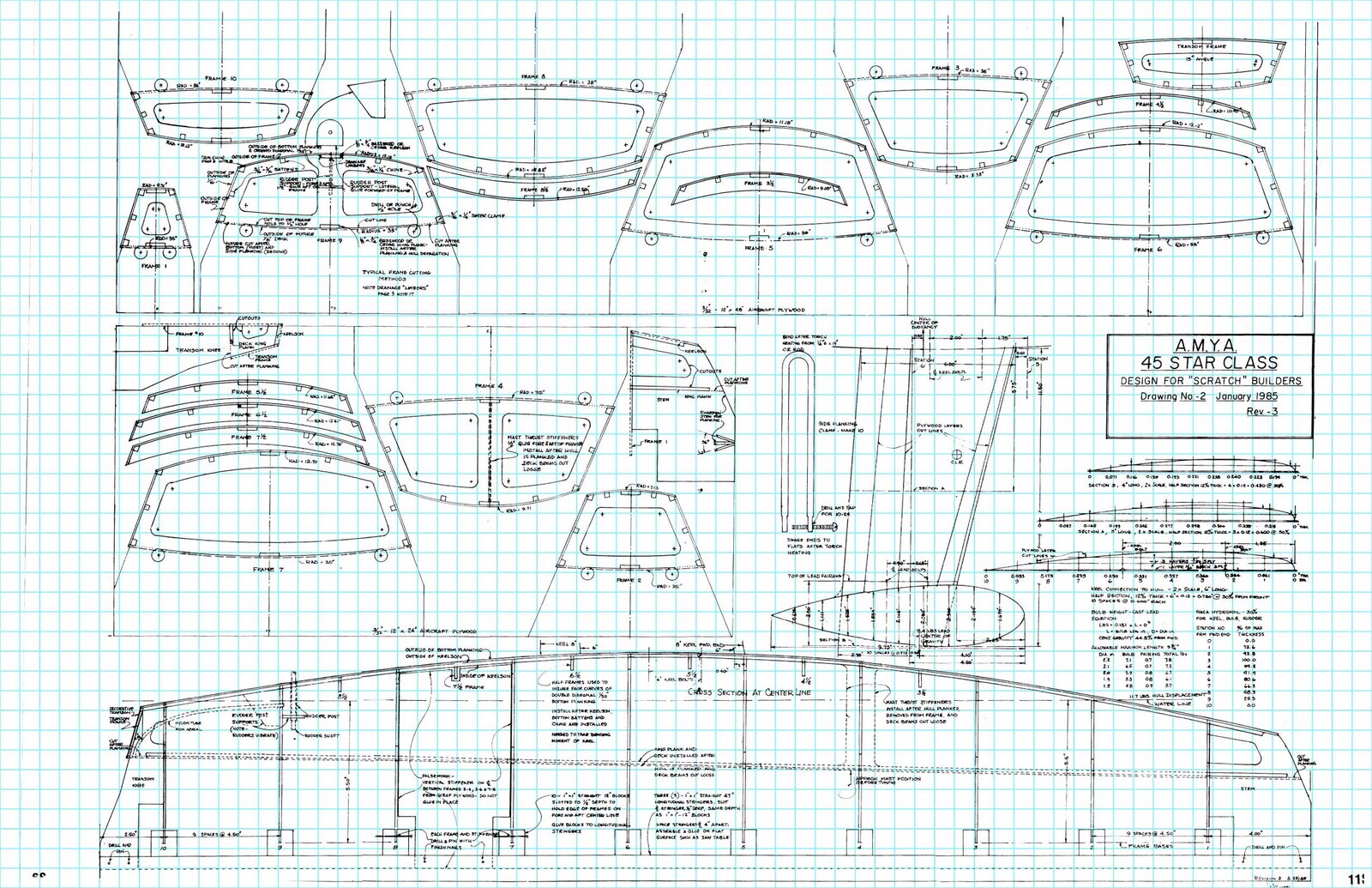
Do you find information about Small Boat Plans And Kits are you looking for? If not, below may help you find more information about the Small Boat Plans And Kits. Thank you for visiting, have a great day.
Read More..

Sabtu, 19 Maret 2016

Boat Plans Arch Davis


Power Up your Switch Rod
In the two plus years I have been plying trout waters with switch / micro spey rods one thing came quite clear, we needed a specialized two hand trout line! After expressing my need to several industry professionals I finally not only found someone to listen but also learned that others had reached the same conclusion. Thanks to line wizards Tim Rajeff and Tom Larimer we now have a set of trout spey lines that will benefit us all for years to come. Dry line or sinking tip these fully integrated lines have established the new standard on trout rivers across the nation while enabling modern trout anglers to easily gain the benefits of two hand angling.

Airflo Super-DRI Switch Lines - In Stock Now!

Finally...a taper formulated for switch and small spey rods with the same feeling and performance youd expect from Airflos family of spey products.

New: Airflo Switch Lines with Tom Larimer from Rajeff Sports on Vimeo.


After years of splicing, welding, and testing "Franken-Lines", Tom Larimer and the Airflo Design Team have produced the best weight-forward, integrated switch line available today. The Super-DRI Switch is an ideal match for light switch and small spey rods, designed for anglers tossing surface patterns or swinging soft hackles and small streamers.

Based loosely on the popular Rage Shooting Head, the Super-DRI Switch has a compact weight-forward head designed specifically to compliment todays lighter two-handers, making loading the rod incredibly easy.

The innovative front taper is capable of turning over a variety of leader and fly combinations, and is also able to accommodate light sink tips. Perhaps the most important feature is the seamless joint between head and running line, making it easy to strip flies all the way to your feet. For easy rigging, each line is packaged with an Airflo 10 Floating PolyLeader.

Available in line weights 3-6, and grain weights ranging from 210-390.

Compliment your Airflo Switch Float with the ALL NEW Airflo Streamer Switch line designed especially for Sink Tip use. 

Switch Streamer - Designed for real sink tips!

An evolutionary step from our popular Skagit Switch design, the Super-DRI Streamer Switch features an aggressive front taper with a shorter, heavier head designed to make tip tossing a dream. Specifically designed to easily load modern switch and short spey rods, the Streamer Switch will help anglers of any level of skill or experience cast more efficiently and effectively.

New: Airflo Switch Streamer with Tom Larimer from Rajeff Sports on Vimeo.


The Airflo Switch Streamer is a complete head and line integrated together and includes a 10 Fast sinking replaceable Polyleader. Just add tippet and fly and your switch rod is ready. 


Specs - Short heavy head for turning over sink tips

Line SizeColorHead WeightHead LengthSink RateTotal Length
WF4Pale Mint/Orange30018ftFloat85ft
WF4.5Pale Mint/Orange33018.5ftFloat85ft
WF5Pale Mint/Orange36018.5ftFloat85ft
WF5.5Pale Mint/Orange39020ftFloat85ft
WF6Pale Mint/Orange42020ftFloat85ft


Get more information about Trout Spey Lines - No Perfect Answer!

Get more Trout Spey Buzz from Trout Spey Chronicles


Do you find information about Boat Plans Arch Davis are you looking for? If not, below may help you find more information about the Boat Plans Arch Davis. Thank you for visiting, have a great day.
Read More..

Boat Plans Nz


THEY SAY THAT IF you have a heater on your boat, you can extend your sailing season by six weeks or so at each end. I have never been swayed by that argument. Having spent most of my life in the sub-tropics, I have no love of sailing in the cold. Or the cold-and-rain, as happens around here. So I reckon there’s no need for a heater on a boat in this region.
There was one on a little Cape Dory 25D I once owned. We found her on an island in the San Juans, and sailed her home one bitter-cold day in February, when there was ice on deck. We had an overnight stop in a marina in Anacortes, where we ran into an old sailing friend. He offered us an electric heater because he said a cold night was forecast, but we scoffed and turned him away. “We have a nice Force 10 heater installed,” we said.
After a meal ashore, we came back to the boat and lit the heater. It had started life as a kerosene model, but the previous owner had converted it to gas. A small can of propane screwed onto the bottom.
We soon noticed something strange. It didn’t seem to be producing a lot of heat, and what heat it did produce rose to the top of the cabin and stayed there. What was even stranger was the fact that the can of propane was collecting a coat of ice. If we stood up in the cabin, the air was luke-warm from the belly-button up, and freezing cold from the belly-button down. As the layer of ice on the can grew thicker, we shut the heater off, fearing that it was actually producing more cold than heat on average. Our bunks were below belly-button level, so we spent a very cold night aboard, having brought only light-weight sleeping bags with us.
One of the first jobs I did on that boat was to convert the Force 10 back to kerosene heat.
It was a fairly easy job once I’d bought the right tools for flaring the copper tubing and so on. The new burner put out a lot more heat and never tried to make ice, but the hot air still hung around above belly-button level until we bought a 12-volt fan and mounted it where a reading lamp used to be. That stirred the air up nicely, distributing warmth all over the cabin from head to toe.
But we rarely used that heater because the fan used electricity, and I was scared we might flatten the battery overnight and not be able to start the diesel engine on a cold morning.
I have learned over the years that very little is simple on a boat, and the less you have to go wrong the better off you are.
So we never had a heater on any other boat since. And our belly buttons have been very grateful.
Today’s Thought
What is true, simple and sincere is most congenial to man’s nature.
— Cicero, De Officiis
Tailpiece
“Who gave you that black eye?”
“My wife.”
"I thought she was out of town.”
“So did I.”

Do you find information about Boat Plans Nz are you looking for? If not, below may help you find more information about the Boat Plans Nz. Thank you for visiting, have a great day.
Read More..

Jumat, 18 Maret 2016

Dinghy Boat Plans


CAMPION MARINE is a Canadian boat manufacturer that seems to be doing just fine in a difficult market. Campion has been making recreational boats for more than 40 years in Kelowna, British Columbia, and now sells its products practically all over the world, even in China.

But what interests me most about Campion (which, incidentally is Canada’s biggest fiberglass boatbuilder) is the fact that its boats are edible. At least I think they are. In a press release the company proclaimed:

Campion Marine Inc., Canadas largest fiberglass boat builder, is proud to announce that it will become the first boat builder in the world to manufacture all of its boats with Envirez®, a renewably sourced bio-derived resin from Ashland Performance Materials.
Envirez® resin is the first resin that uses a substantial amount of soybean oil and corn derived ethanol in its formulation.
So now, if you run out of food in mid-ocean, you can eat your boat. You’ll have to spit out the fiberglass strands, of course, otherwise they’ll get stuck in your teeth; and the diet of soybean and ethanol may start to pale after a week or two; but at least you won’t starve.
The only decision left to make is: Where do you start eating? Somewhere above the waterline, obviously. Not the cockpit floor, but maybe the coamings. Or perhaps the toerails if your crew wash their feet regularly.
The edible boat ushers in a new era of yachting and I look forward to the first book of recipes. Transom stew. Corn à la Cockpit. Poopdeck Purée. Pintle and Gudgeon Potage. It all sounds so delicious I can hardly wait to buy an old wreck of a Campion and invite my friends to a boat tasting.
Today’s Thought
This has got to be the most expensive food ever laminated.
— Bryan Miller, NY Times, (on Manhattan’s Casual Quilted Giraffe restaurant)
Tailpiece
“Don’t you think he looks like me, nurse?”
“Yes, sir, but don’t let it worry you.  All new-born babies look strange for a while.”

(Drop by every Monday, Wednesday, Friday for a new Mainly about Boats column.)


Do you find information about Dinghy Boat Plans are you looking for? If not, below may help you find more information about the Dinghy Boat Plans. Thank you for visiting, have a great day.
Read More..

Wood Boat Plans And Kits


IT OCCURS TO ME now and then that I’ve written and repeated just about everything I know about boats and the sea, and that my readers must be getting just a tad bored with it all. But then I remember that new generations keep coming along, generations that have to learn all the same old things all over again, because humans don’t seem to be able to pass on the seeds of experience to the fruit of their loins.

So I console myself by catering to the newbies, the neophytes who are anxious to learn how not to kill themselves at sea, the ones who have not yet been bored by my ravings. And interesting things happen at sea, believe me.

So, in this vein of dispensing help for the unwitting, I ask: Do you know why boats so often broach, roll broadside on, and capsize when they’re running before the wind in large waves? It’s because when a wave breaks under your stern you have practically no steering power to keep her running straight. The rudder is suspended in foam, not water, and it can’t do its job. If you’ve ever been dumped by a big breaker while body surfing you’ll know the awful feeling of not being able to float high enough to get your head above water.

And if your boat heels to 45 degrees, you don’t have much steering ability, in any case. Think about it. The rudder is trying to lift the stern toward the sky as much as it is trying to turn the stern sideways. And, of course, if you do a 90-degree capsize you can’t steer at all. If the rudder isn’t totally out of the water, as it would be on a tubby light-displacement boat, it will be horizontal and unable to turn the stern either way.

Stability at sea is always a fascinating subject for sailors, whether they actually get away from the sight of land or not, and one of the very basic facts about boats is that stability comes as a cube of the length, other things being more or less equal. This means that a 30-footer is 72 percent more stable than a 25-footer, which explains why a 30-footer can stand up to its canvas so much better. It also explains why a 30-footer costs so much more than a 25-footer. But that’s another subject for neophytes to learn about. Some other day, perhaps. Class dismissed.

Today’s Thought
It hath been an opinion that the French are wiser than they seem, and the Spaniards seem wiser than they are; but howsoever it be between nations, certainly it is so between man and man.
—Bacon, Essays

Tailpiece
Golfer: “You must be the worst caddie in the world.”
Caddie: “Oh come now — that would be far too much of a coincidence.”

(Drop by every Monday, Wednesday, Friday for a new Mainly about Boats column.)


Do you find information about Wood Boat Plans And Kits are you looking for? If not, below may help you find more information about the Wood Boat Plans And Kits. Thank you for visiting, have a great day.
Read More..