Tampilkan postingan dengan label dealing. Tampilkan semua postingan

Senin, 21 Maret 2016

Small Boat Plans And Kits


THE WAY OF A SHIP in the sea is not as great a mystery as the Bible makes it out to be. Most of us can understand that a boat left to its own resources in heavy seas will tend to adopt a position that’s roughly broadside on to the wind.

Most keelboats will settle that way, and be quite happy, when all sail is taken down. Often, there’s a tendency, especially with sloops, for the bow to drift downwind a bit, which causes the hull to gather way and forereach. You can counteract that by lashing the helm to leeward, so that every time she tries to go forward the rudder will point her up into the wind and stop her in her tracks.  This is known as lying ahull, and works fine until conditions get so bad that your boat is being lifted by large breaking waves and hurled bodily down to leeward.

Most of us can also understand that things would be better if the boat could be made to lie with the pointy end facing the oncoming waves. Then she’d be presenting a much smaller area to the force of breaking waves, and she’d be much more difficult to overturn.

The question is how do you keep her facing that way in heavy weather without the help of an engine?  If you can keep the bow still in the water, then of course she will lie downwind as if she were made fast to a post. The sea anchor, made fast at the bow, is designed to do that, to act as a post, although it’s a post that actually moves very slowly through the water. But while it works well for boats with even, shallow draft, the sea anchor won’t keep a normal keel boat pointed into the waves, no matter whether it’s a fin keeler or a full keeler.

The Pardeys, a well known and very experienced cruising couple, claim to have kept their 29-footer pointing more or less into the waves by setting a sea anchor from a bridle, with one end of the bridle attached to the bow and the other to the stern. By taking up slack on one end of the bridle or the other, you can  of course alter the way the boat lies.

I’ve never tried this, but I have serious doubts whether normal people could manage this trick. For a start, I can’t imagine how I would be able to drag a sea anchor with its mass of small lines and its 25- to 30-foot spread of parachute material across the deck and over the side to windward in a heavy gale.

So I have never tried to lie bow-on to the waves in heavy weather. My method, in a full-keeler, is simply to lie ahull with the tiller lashed to leeward, until things get too dicey, and then to run off downwind under a storm job or bare poles. You need lots of sea room to do that, of course. A fin keeler is best kept moving at all times, but this needs a fit crew.

Some boats will lie about 45 to 60 degrees off the wind with the help of a special storm mainsail. It’s cut so that a lot of its area is aft of the boat’s underwater pivot point, the center of lateral resistance, so that it tries to point her up into the waves all the time.  But most boats these days don’t come equipped with a storm main, and few of us realize that using a third reef in the working mainsail instead doesn’t cut it, because that actually moves the sail’s center of effort farther forward, instead of aft where you want it.

 Anyway, the only real way to sort out this problem is to go out in bad weather and experiment with your own boat. The best way would be to persuade some experienced sailor with a sister ship to take you offshore, hunting for a storm, and watch what he or she does to cope with heavy weather. But I’d say your chances of pulling that off are rather slim.

Today’s Thought
Everybody talks about the weather, but nobody does anything about it.

— Charles Dudley Warner, Editorial, the Hartford Courant, c. 1890

Tailpiece

Overhead at a Boy Scout meeting:

“Did you ever have one of those days when you felt just a little untrustworthy, disloyal, unhelpful, discourteous, cowardly, and antagonistic toward those wretched old women who always wait for suckers to help them across the goddam road?”

(Drop by every Monday, Wednesday, Friday for a new Mainly about Boats column.)
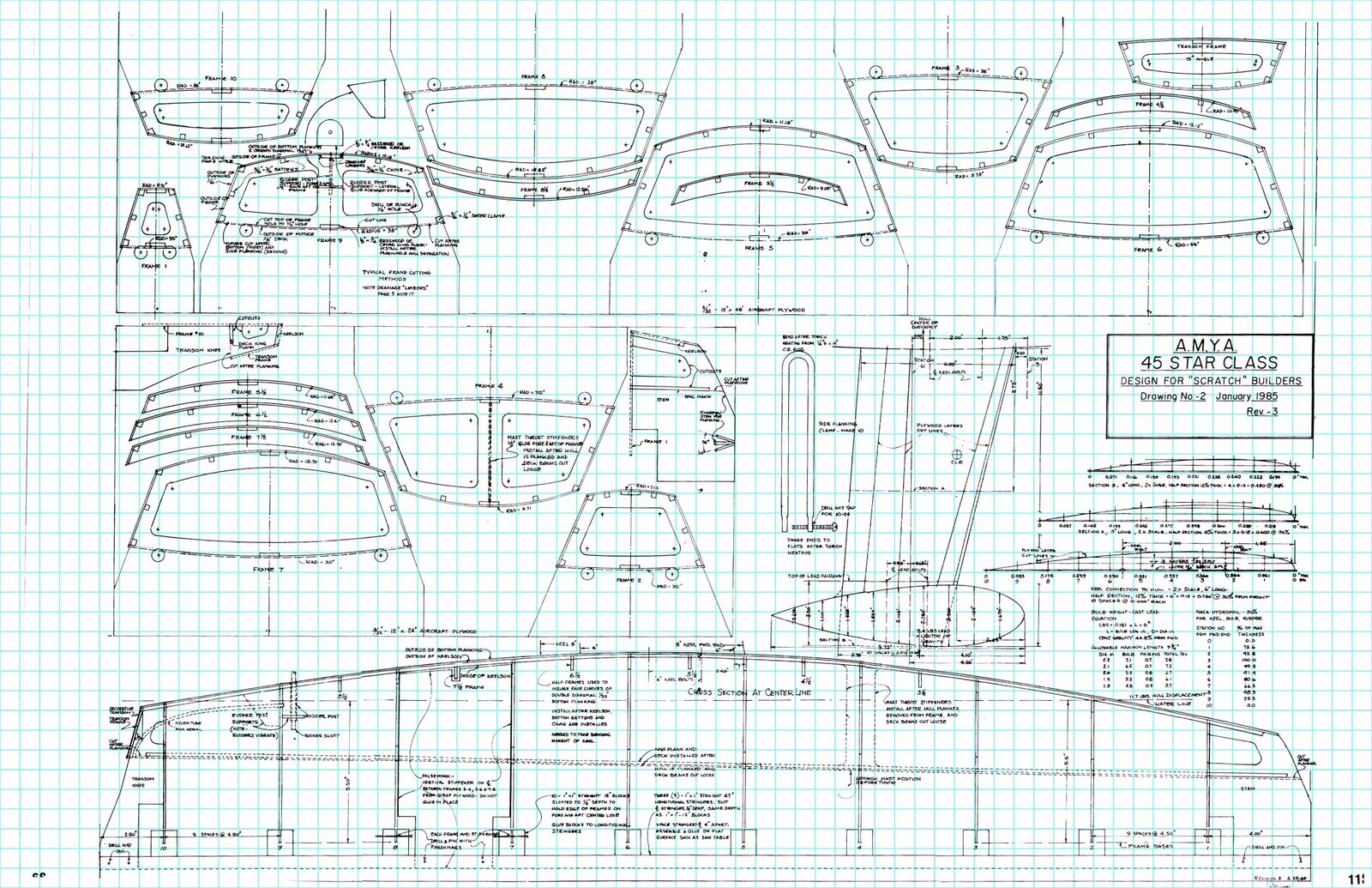


Do you find information about Small Boat Plans And Kits are you looking for? If not, below may help you find more information about the Small Boat Plans And Kits. Thank you for visiting, have a great day.
Read More..

Jumat, 18 Maret 2016

Wood Boat Plans And Kits


IT OCCURS TO ME now and then that I’ve written and repeated just about everything I know about boats and the sea, and that my readers must be getting just a tad bored with it all. But then I remember that new generations keep coming along, generations that have to learn all the same old things all over again, because humans don’t seem to be able to pass on the seeds of experience to the fruit of their loins.

So I console myself by catering to the newbies, the neophytes who are anxious to learn how not to kill themselves at sea, the ones who have not yet been bored by my ravings. And interesting things happen at sea, believe me.

So, in this vein of dispensing help for the unwitting, I ask: Do you know why boats so often broach, roll broadside on, and capsize when they’re running before the wind in large waves? It’s because when a wave breaks under your stern you have practically no steering power to keep her running straight. The rudder is suspended in foam, not water, and it can’t do its job. If you’ve ever been dumped by a big breaker while body surfing you’ll know the awful feeling of not being able to float high enough to get your head above water.

And if your boat heels to 45 degrees, you don’t have much steering ability, in any case. Think about it. The rudder is trying to lift the stern toward the sky as much as it is trying to turn the stern sideways. And, of course, if you do a 90-degree capsize you can’t steer at all. If the rudder isn’t totally out of the water, as it would be on a tubby light-displacement boat, it will be horizontal and unable to turn the stern either way.

Stability at sea is always a fascinating subject for sailors, whether they actually get away from the sight of land or not, and one of the very basic facts about boats is that stability comes as a cube of the length, other things being more or less equal. This means that a 30-footer is 72 percent more stable than a 25-footer, which explains why a 30-footer can stand up to its canvas so much better. It also explains why a 30-footer costs so much more than a 25-footer. But that’s another subject for neophytes to learn about. Some other day, perhaps. Class dismissed.

Today’s Thought
It hath been an opinion that the French are wiser than they seem, and the Spaniards seem wiser than they are; but howsoever it be between nations, certainly it is so between man and man.
—Bacon, Essays

Tailpiece
Golfer: “You must be the worst caddie in the world.”
Caddie: “Oh come now — that would be far too much of a coincidence.”

(Drop by every Monday, Wednesday, Friday for a new Mainly about Boats column.)


Do you find information about Wood Boat Plans And Kits are you looking for? If not, below may help you find more information about the Wood Boat Plans And Kits. Thank you for visiting, have a great day.
Read More..

Selasa, 08 Maret 2016

Boat Plans Arch Davis


MODERN BOATS come complete with many of the household appliances landlubbers take for granted these days, including microwave ovens, but only the very biggest and most luxurious boats have dishwashers. That leaves the rest of us to wash the dishes by hand, often in cold salt water.

It’s not a pleasant task, especially when it follows a satisfying meal and a mellowing beer or two, so it’s little wonder that people try all sorts of tricks to avoid taking their turn at washing up.

John Steinbeck knew all about it. In 1940 the famous author sailed in a sardine boat with a small crew to collect marine invertebrates down south of San Diego in the Gulf of California. In his book, The Log from The Sea of Cortez, he tells this delightful little tale:

“We carried no cook and dishwasher; it had been understood that we would all help. But for some time Tex had been secretly mutinous about washing dishes. At the proper times he had things to do in the engine-room. He might have succeeded in this crime if he had ever varied his routine, but gradually a suspicion grew on us that Tex did not like to wash dishes.

“He denied this vigorously. He said he liked very much to wash dishes. He appealed to our reason. How would we like it, he argued, if we were forever in the engine-room, getting our hands dirty? There was danger down there too, he said. Men had been killed by engines. He was not willing to see us take the risk.

“We met his arguments with a silence that made him nervous. He protested then that he had once washed dishes from west Texas to San Diego without stopping, and that he had learned to love it so much that he didn’t want to be selfish about it now.

“A circle of cold eyes surrounded him. He began to sweat. He said that later (he didn’t say how much later) he was going to ask us for the privilege of washing all the dishes, but right now he had a little job to do in the engine room. It was for the safety of the ship, he said. No one answered him. Then he cried, ‘My God, are you going to hang me?’

“At last Sparky spoke up, not unkindly but inexorably. ‘Tex,’ he said, ‘you’re going to wash ’em  or you’re going to sleep with ’em.’

“Tex said, ‘Now just as soon as I do one little job there’s nothing I’d rather do than wash four or five thousand dishes.’

“Each of us picked up a load of dishes, carried them in, and laid them gently on Tex’s  bunk. He got up resignedly then and carried them back and washed them. He didn’t grumble, but he was broken. Some joyous light had gone out of him, and he never did get the catsup out of his blankets.”

Today’s Thought
Let us be grateful to Adam, our benefactor. He cut us out of the “blessing” of idleness and won for us the “curse” of labor.
— Mark Twain, Pudd’nhead Wilson’s Calendar

Tailpiece
A woman who heard a 5-year-old girl swearing like a trooper in a city park  reported her to the park keeper. He went up to the little girl and said:  “I hear there’s someone in the park who’s using very naughty language.”
“Who told you that?” demanded the girl sharply.
“A bird whispered it in my ear,” said the park keeper.
“I’ll be damned,” said the girl. “And to think I’ve been feeding the ungrateful little bastards.”
(Drop by every Monday, Wednesday, Friday for a new Mainly about Boats column.)

Do you find information about Boat Plans Arch Davis are you looking for? If not, below may help you find more information about the Boat Plans Arch Davis. Thank you for visiting, have a great day.
Read More..