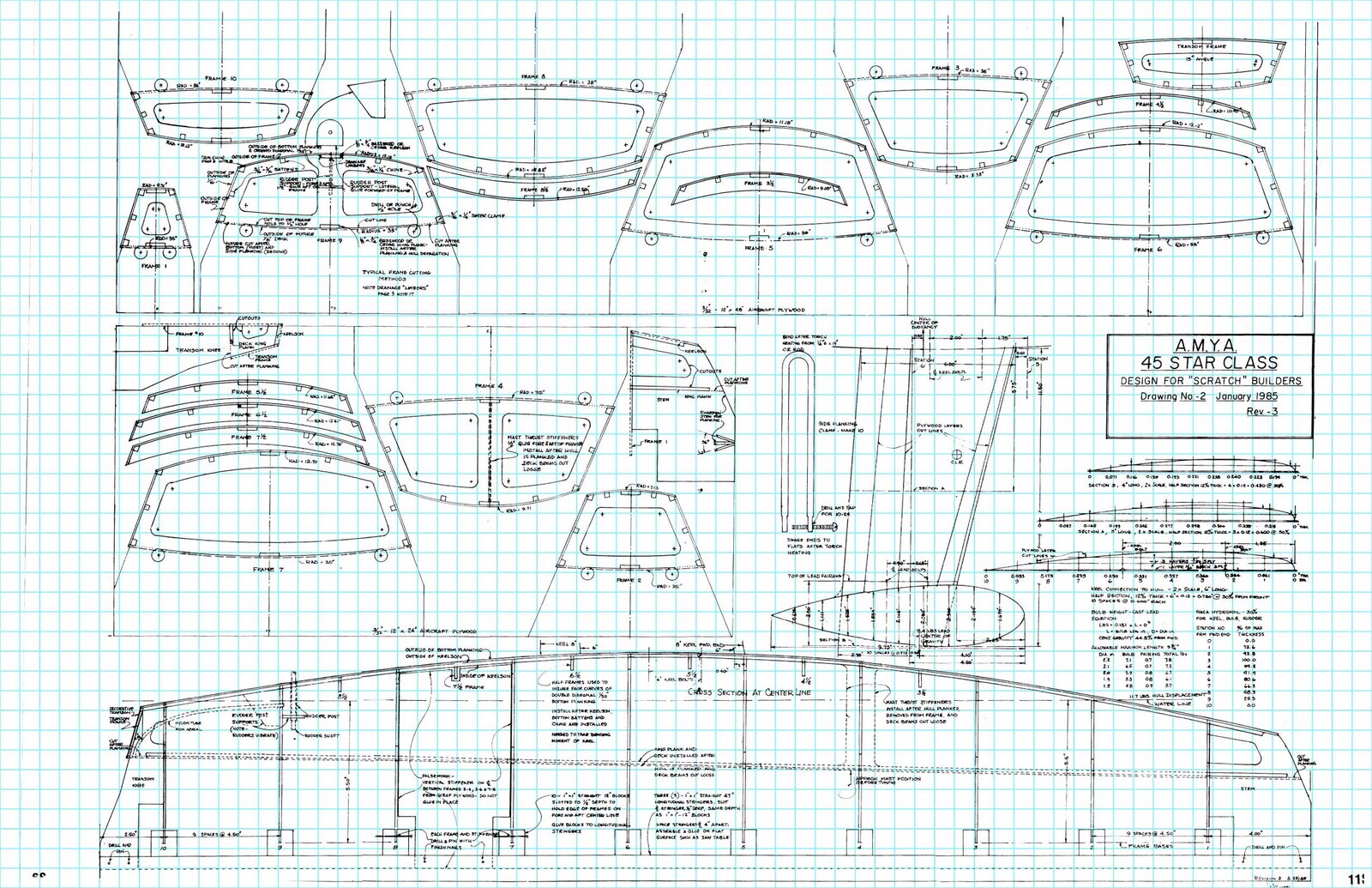
Small Boat Plans And Kits
The provisions of section 171B have caused quite a lot of doubt and difficulty over the years, and there are still one or two anomalies that have not been entirely ironed out. We can at least be confident about the straightforward operation of section 171B(1) relating to operational development. The only issue that needs to be considered is the date when the development was substantially completed (as per
Sage), and it is entirely logical that if you want an LDC regarding operational development under section 191(1)(b), the building or other operational development must still be in existence at the time when the application is made. You cannot apply for an LDC for the lawfulness of a building that has ceased to exist, whatever the reason for its demise.
What clearly emerges from the cases involving section 171B(2) and (3) (and section 191(1)(a) and (c)) is that a very clear distinction has to be made between breaches of planning control involving a material change of use and those involving a breach of condition. There is no doubt at all that, in order to become immune from enforcement, a breach of condition must be continuous. In the case of occupancy conditions, even a void period (other than a temporary stopping and starting, for example between tenancies) will bring the breach of condition to an end, and resumed occupation in breach of the condition will be a fresh breach of that condition, with the clock starting again from zero.
It is important to remember that if a breach of condition becomes immune from enforcement and therefore lawful, even where an LDC is issued to that effect, that immunity will still be lost by any subsequent compliance with the condition, for example by a void period where the condition in question is an occupancy condition (other than a purely seasonal condition –see
N Devon DC v FSS and Stokes (2004), which I cited earlier). Lawfulness of the breach of condition, even when confirmed by an LDC, does not remove the condition, so that the lawfulness of the breach will continue only so long as the breach of condition continues.
This is to be contrasted with the position where the breach of planning control comprises a material change of use. Here, continuity of the use is clearly required in order to attain immunity (and therefore lawfulness), but it is clear from
Panton that upon lawfulness being achieved under section 191(2) (and the operation of that sub-section does
not depend on the issue of an LDC) subsequent continuity of the use is no longer required, so long as any later cessation in the use does not amount to abandonment or is not brought about by some other supervening event in planning terms (see
Hartley and
Pioneer Aggregates cited in an earlier part of this article). What
Thurrock and
Swale established, on the other hand, is that those earlier authorities have no application during the period when immunity has not yet been achieved under either the 4-year or the 10-year rule (as applicable).
There are certain points that emerge from the decided cases that need to be borne in mind. First, in the case of changes of use at least, the relevant period in respect of which immunity from enforcement is acquired is the period of four years or ten years “
beginning with the date of the breach”. It is abundantly clear from this wording that it is entirely wrong to talk in terms of a ‘rolling period’ of 4 years or 10 years so far as a change of use is concerned. The relevant period in this case does
not end with the section 191 application or with the service of an enforcement notice under section 172. It is equally wrong to think in terms of the ‘breach’ continuing until one or other of those events.
It is apparent that there has from time to time been some woolly thinking on this point, or at least some rather loose and imprecise use of language. What emerges from the decided cases discussed in earlier parts of this article is that, following the relevant period of continuous breach so as to achieve immunity from enforcement (whereby the change of use becomes lawful), uninterrupted continuity of the use is not thereafter necessary (as discussed above, see
Panton), but that the
use must be current at the time of making an application under section 191(1)(a). It is incorrect to talk of the ‘breach’ continuing at that date, because the breach of planning control ceased upon the use becoming lawful at the end of the 4/10-year period beginning with the date of the breach.
It is entirely logical that the use must be current at the date of the application under section 191(1)(a), just as a building must be in existence at the date of an application under section 191(1)(b); otherwise there is nothing that an LDC can properly certify. But it is entirely erroneous to assume on this basis that the ‘breach of planning control’ (the change of use) must have been continuous for a ‘rolling period’ ending with the date of the application. In accordance with the rule in
Panton it is entirely possible that, following lawfulness having been achieved by continuous use for 4 or 10 years beginning with the date of the breach, there may then (quite legitimately) have been some subsequent interruption in the use
which is of no legal effect in terms of the lawfulness of the use. These points clearly emerge from the judgments cited in the course of this article.
The one remaining point that may require clarification is the situation where there is a material change of use followed by, say, two years’ continuous use, then a cessation of the use for, let us say, a year, followed then by a resumption of the use for (in a 10-year rule case) 11 years, followed thereafter by further intermittent use for the same purpose, but no other intervening use or supervening event, with the use once again being current at the date when an LDC application is made.
We know from
Thurrock that the break of continuity after the first two years will have prevented immunity having been acquired from the date of the original change of use, but how are we to treat the resumption of the use after the cessation of that use for a year, bearing in mind that section 171B(3) provides that no enforcement action may be taken after the end of the period of ten years
“beginning with the date of the breach”? The answer, I think, must be that the
original change of use must be entirely discounted, so that the date of the breach for the purposes of the 10-year rule must be taken to be the date of the resumption of the use after the end of the one-year cessation of that use. This must for the purposes of the Act be taken to be a fresh change of use and thus an entirely fresh breach of planning control.
I appreciate that during the one-year cessation in the use the property may well have retained fixtures, fittings and equipment associated with the original change of use, and it might perhaps be argued that for that reason the original breach of planning control had not been remedied when the use was suspended after the first two years. It would seem from various judicial
dicta, however, that it would not be open to the LPA to serve an enforcement notice during the period that the use was in abeyance, even though removal of the fixtures, fittings and equipment associated with the original change of use could both before and after the interruption in the active use of the property have legitimately been included in the requirements of an enforcement notice (see, for example,
Somak Travel Ltd v. SSE [1987] JPL 630), the point being that the requirements of the notice can go beyond the scope of the actual breach itself to encompass items not constituting part of the actual breach of planning control, i.e. matters which in themselves would not amount to development.
It follows that, in the case I have predicated above, the “date of the breach” with which the 10-year period commenced must be the date on which the use resumed after the year-long cessation in the use. There was then (in my example) an 11-year period of continuous use, as a result of which immunity from enforcement (and consequently lawfulness) was undoubtedly achieved. Thereafter the rule in
Panton (following
Hartley and
Pioneer Aggregates) will have operated so that any subsequent discontinuity in the use will not have affected the position, provided that the use is actually current at the time of the LDC application under section 191(1)(a). For all these reasons, in the case I have imagined an LDC would undoubtedly have to be issued.
There are just a couple of other loose ends. As I noted in discussing
Swale earlier, that case turned to a significant degree on the inspector’s treatment of the evidence. However, no mention is made in the judgment of the well-known rule established by
Gravesham B.C. v. SSE (1984) P.& C.R. 142, that where a change of use to use as a dwelling is alleged to have occurred the building must, as a question of fact, be constructed or adapted for use as a dwellinghouse as normally understood, that is to say, as a building that provides for the main activities of, and ordinarily affords the facilities required for, day-to-day private domestic existence. There must at the very least have been a question mark in this regard over the alleged barn conversion in the
Swale case.
Finally, despite the numerous references in the decided cases to the need for continuity of use, even
Thurrock (which went into the matter more deeply than the other reported cases) did not address the problem of deciding whether or not the use had in fact continued throughout the 10-year period. In other words, what actually constitutes a discontinuity in the use? It is, of course, ‘a matter of fact and degree’ in each case, but there is still a significant degree of uncertainty as to precisely what incidents might constitute a discontinuity in the use for the purposes of the 4/10-year rule. There is similarly some remaining uncertainty as to exactly what amounts to “occupation” in relation to the continuity of a breach of condition relating to an occupancy condition.
THE END
© MARTIN H GOODALL
Do you find information about
Small Boat Plans And Kits are you looking for? If not, below may help you find more information about the Small Boat Plans And Kits. Thank you for visiting, have a great day.


 Studded Felt
 Studded felt gives you the best of two worlds, Felt sticks good on slippery rocks and studs give them that extra measure to cut the slime and find something solid to stick to


